The Americas · Mexico City
Green chilaquiles in one frying pan
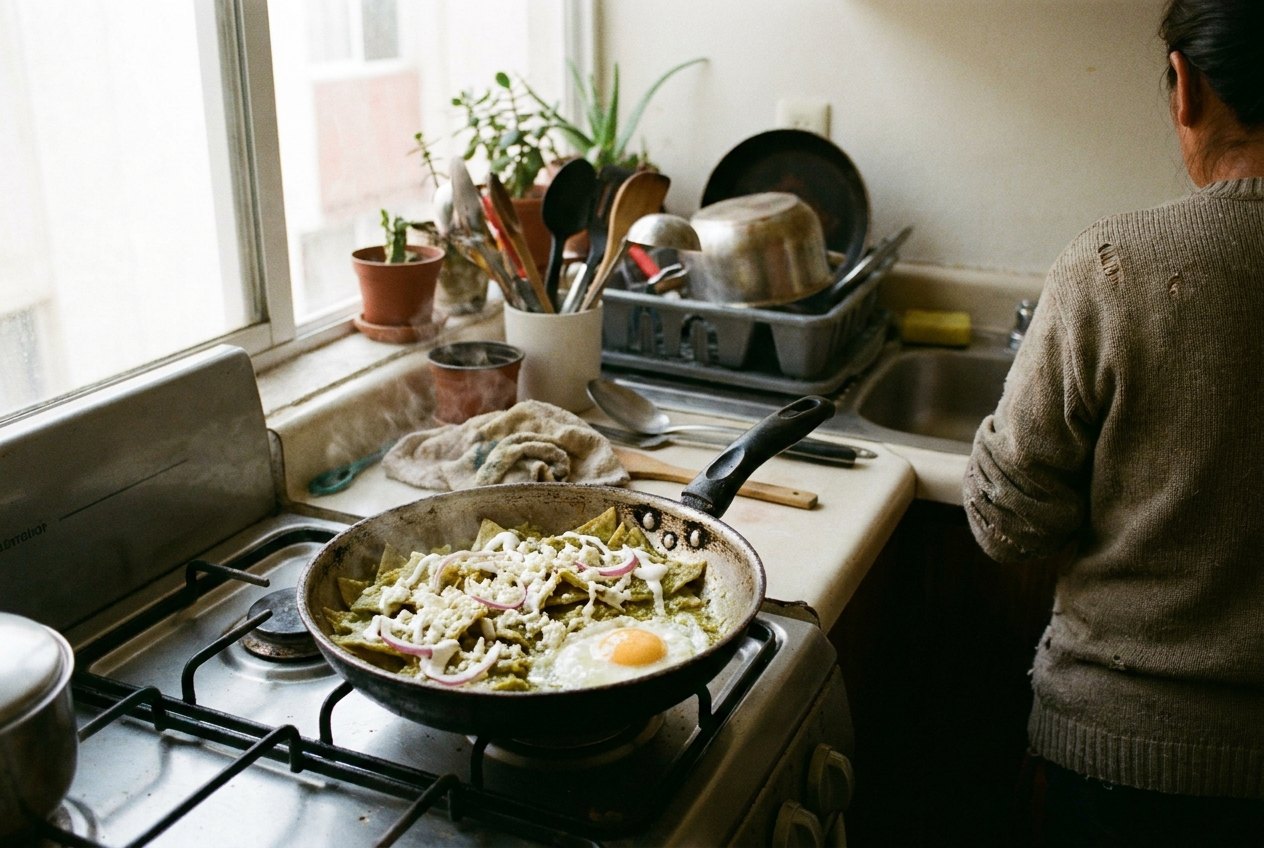
Chilaquiles turn yesterday's tortillas into the best breakfast in Mexico City: fried crisp, simmered briefly in green salsa and topped with cheese, cream, onion and an egg.
Every Mexico City household knows what to do with tortillas that have gone a day stale: cut them into triangles, fry them until crisp, and simmer them briefly in salsa until they soften at the edges but keep some bite. Topped with crumbled cheese, a swirl of cream, sliced raw onion and coriander, and often a fried egg, they become chilaquiles, the city's favourite breakfast and a famous cure for the night before.
Chilaquiles can be red, made with a salsa of dried chiles and tomatoes, or green, made with tomatillos and fresh chiles. Green is easier in a rented flat, because the salsa needs no blender: boil the tomatillos and chiles, mash them with a fork, and you are nearly there.
Two neighbourhood markets
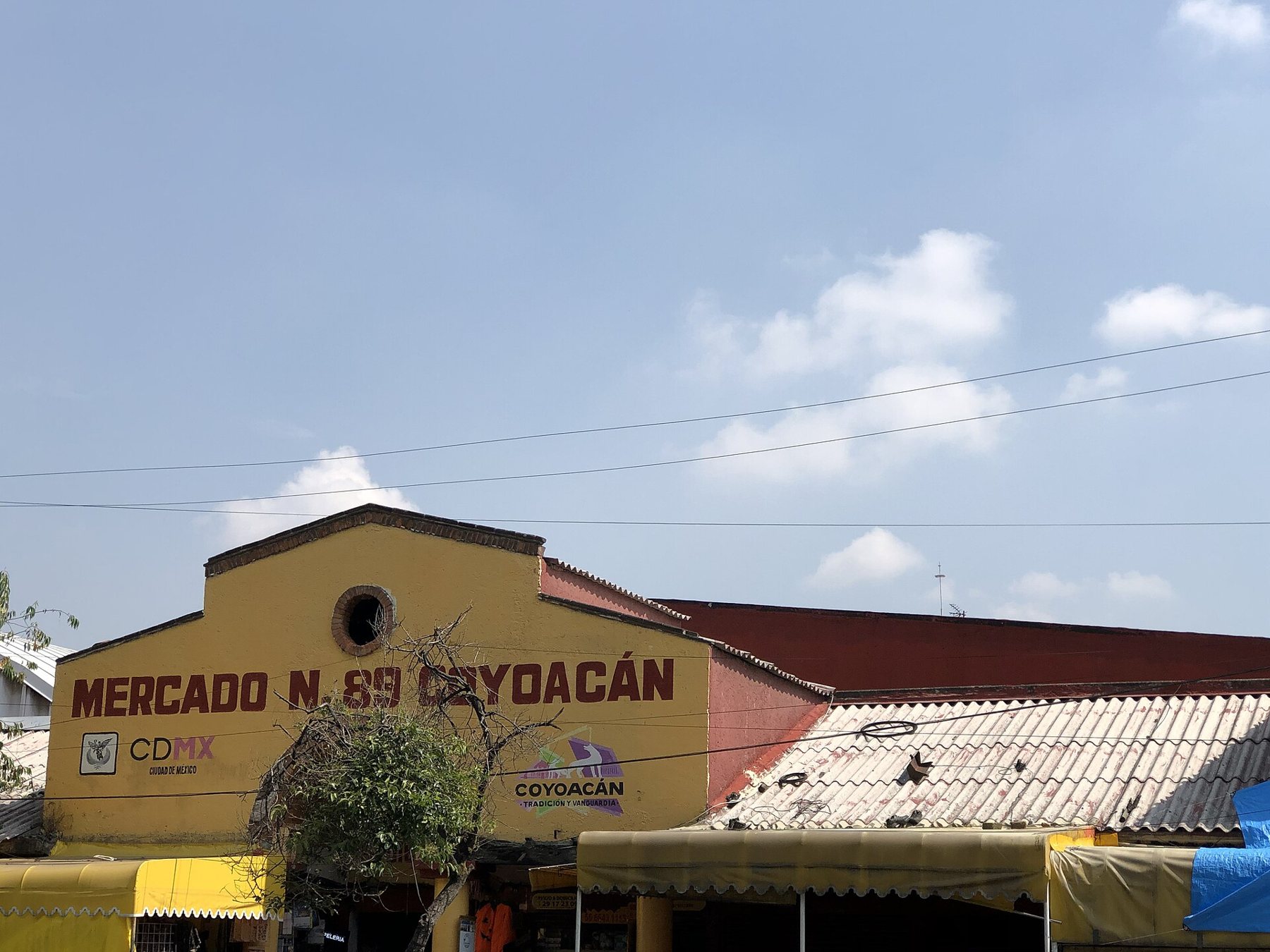
Mexico City has hundreds of public markets, mercados, one in almost every neighbourhood, open every day from early morning to late afternoon. The Mercado de Coyoacán, opened in 1921 in the old village of Coyoacán in the south of the city, is a busy, cheerful market with fruit, vegetables, meat, flowers, crafts and a famous row of stalls selling tostadas. Coyoacán's plazas and colonial streets, a short walk away, make a fine morning out.
The Mercado de Medellín, in the Roma Sur neighbourhood, is known for its range of products from across Mexico and Latin America, from chiles and herbs to cheeses and fruit. It is less touristy than many central markets and very popular with residents.
In either market, the tortilla stalls sell fresh corn tortillas by weight, warm from the press. Buy them a day ahead for this dish, or let them dry out on the counter for a few hours.
Tomatillos, chiles and cheese
Tomatillos look like small green tomatoes wrapped in a papery husk. They are tart and bright, and they are the base of most green salsas. Choose firm ones that fill their husks, peel off the husks and rinse off the sticky coating underneath. Serrano chiles are slim and green, hotter than jalapeños; use one for gentle heat, two or more for a real kick, and remove the seeds if you want it milder.
Queso fresco is a fresh, crumbly white cheese, salty and mild. Mexican crema is thinner and slightly tangier than sour cream. Both are sold at the cheese stalls, and the stallholders will let you taste before you buy.
- Cut the tortillas into six triangles each and spread them out to dry for an hour if they are still soft.
- Put the husked tomatillos, the serrano chiles, a quarter of the onion and two cloves of garlic in a pan, cover with water and simmer for about 10 minutes, until the tomatillos turn olive green and soft.
- Meanwhile, heat a good layer of oil in a large frying pan. Fry the tortilla pieces in batches until golden and crisp, then drain on paper. Pour off most of the oil.
- Lift the tomatillos, chiles, onion and garlic into a bowl with a slotted spoon. Mash them thoroughly with a fork or a potato masher, adding a little of the cooking water and a handful of chopped coriander. Season with salt.
- Pour the salsa into the frying pan and bring it to a simmer for a few minutes. Add the fried tortillas, stir to coat, and cook for one or two minutes only, until they begin to soften but still have some crunch.
- In a second pan, fry the eggs to your liking.
- Divide the chilaquiles between plates, top with crumbled queso fresco, crema, thinly sliced onion, coriander and a fried egg.
Soft or crunchy
Mexicans argue about chilaquiles almost as much as Turks argue about menemen. Some like them soft, almost like a casserole, simmered until the tortillas have absorbed the salsa; others like them barely dressed, still crunchy. Neither is wrong. The longer they sit in the sauce, the softer they become, so serve them as soon as they reach the texture you like.
You can also add shredded cooked chicken, bought from a rotisserie stall at the market, which makes them a full meal for any time of day.
Water, tortillas and safety
Tap water in Mexico City is not usually drunk. Use bottled or purified water for drinking and for rinsing herbs and anything eaten raw, such as the coriander and onion. The water for boiling the tomatillos can come from the tap, since it is boiled. Many flats have a large water dispenser in the kitchen for this purpose.
Keep fresh tortillas wrapped in a cloth or in a plastic bag; they dry out quickly. To warm leftover tortillas, heat them briefly on both sides in a dry pan until soft and puffed.
Chilaquiles can be red, made with a salsa of dried chiles and tomatoes, or green, made with tomatillos and fresh chiles.
The rest of the shopping
Any leftover salsa verde keeps for a couple of days in the fridge and is good on eggs, tacos or grilled meat. Leftover tortillas make quesadillas: fill with cheese, fold and heat in a dry pan until the cheese melts. The markets also sell ready-cooked foods, from carnitas to barbacoa on weekends, sold by weight with tortillas to make tacos at home. For more Mexican market cooking, see Oaxaca's tlayudas, or for another breakfast in a pan, menemen in Istanbul. Market hours change, so check them for Mexico City before you go.
Other markets worth a morning
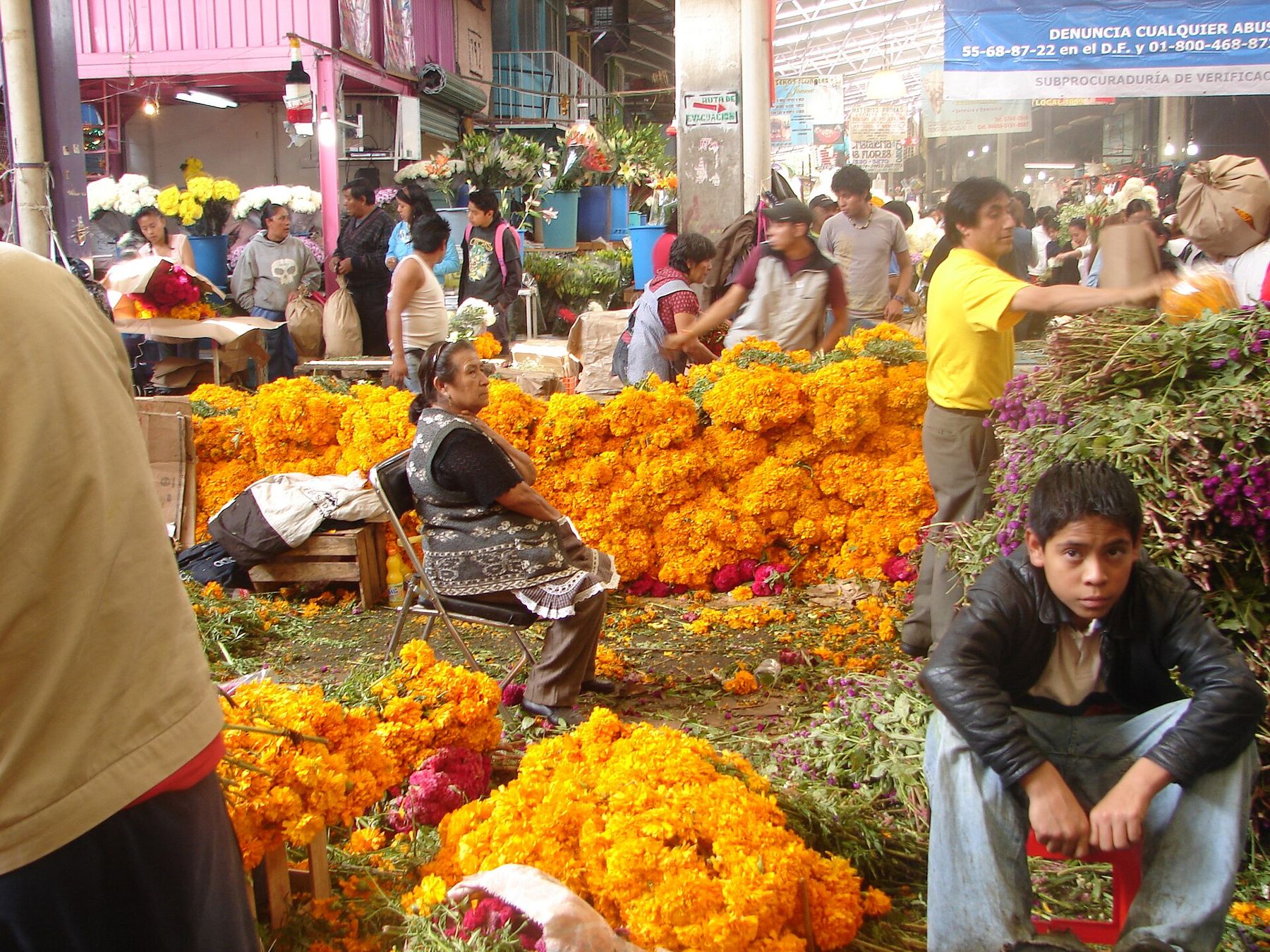
Mexico City's markets are almost endless. The Mercado de Jamaica, east of the centre, is the city's great flower market, a riot of colour with food stalls around it. The Mercado de San Juan, near the historic centre, is known for unusual meats, cheeses and imported goods, popular with chefs. The Mercado de la Merced, the city's huge traditional market, sprawls across several blocks and is best visited with a clear idea of what you want, and a careful eye on your belongings.
Each neighbourhood market also has its comedores, small counters serving set lunches of soup, rice, a main dish and a drink at low prices. Eating at one is a good way to learn what is in season and how residents eat on an ordinary weekday.
The photographs on this page were shared by their photographers under open licences. Names and licences are on who took the market shots.