Europe's market halls · Budapest
Lecsó from the Great Market Hall
Hungary's summer stew is a pan of soft peppers and tomatoes coloured with paprika. With a market morning and one burner, it makes a supper that tastes of Budapest in August.
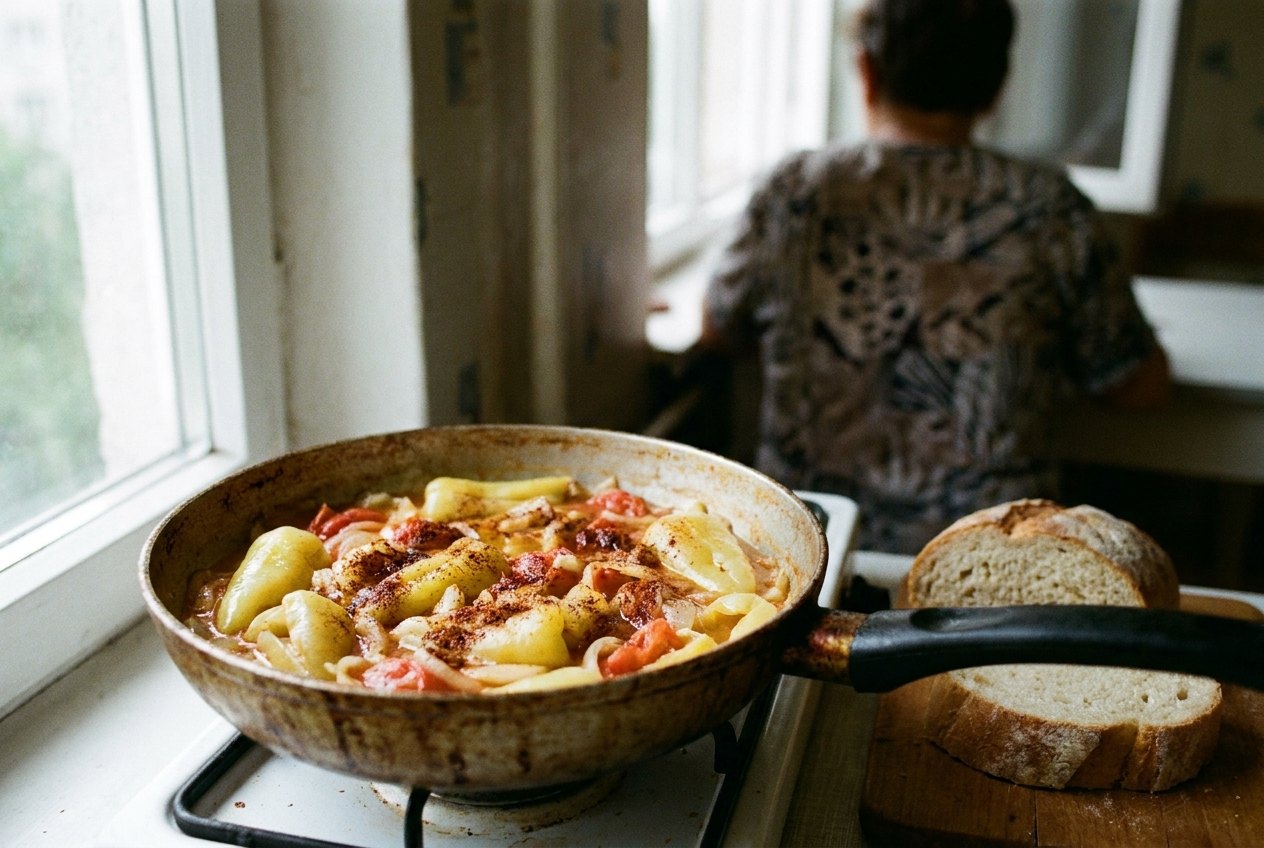
Lecsó is the dish of a Hungarian summer. Pale green and yellow peppers are cooked slowly with onions and ripe tomatoes until they collapse into a soft, sweet stew, coloured and seasoned with sweet paprika. It is eaten with bread, often with eggs stirred in at the end or slices of smoked sausage added for a heartier meal, and every Hungarian family has its own version.
It needs one pan, one burner and the peppers and tomatoes of late summer, which pile up on market stalls across the country from July.
The Great Market Hall
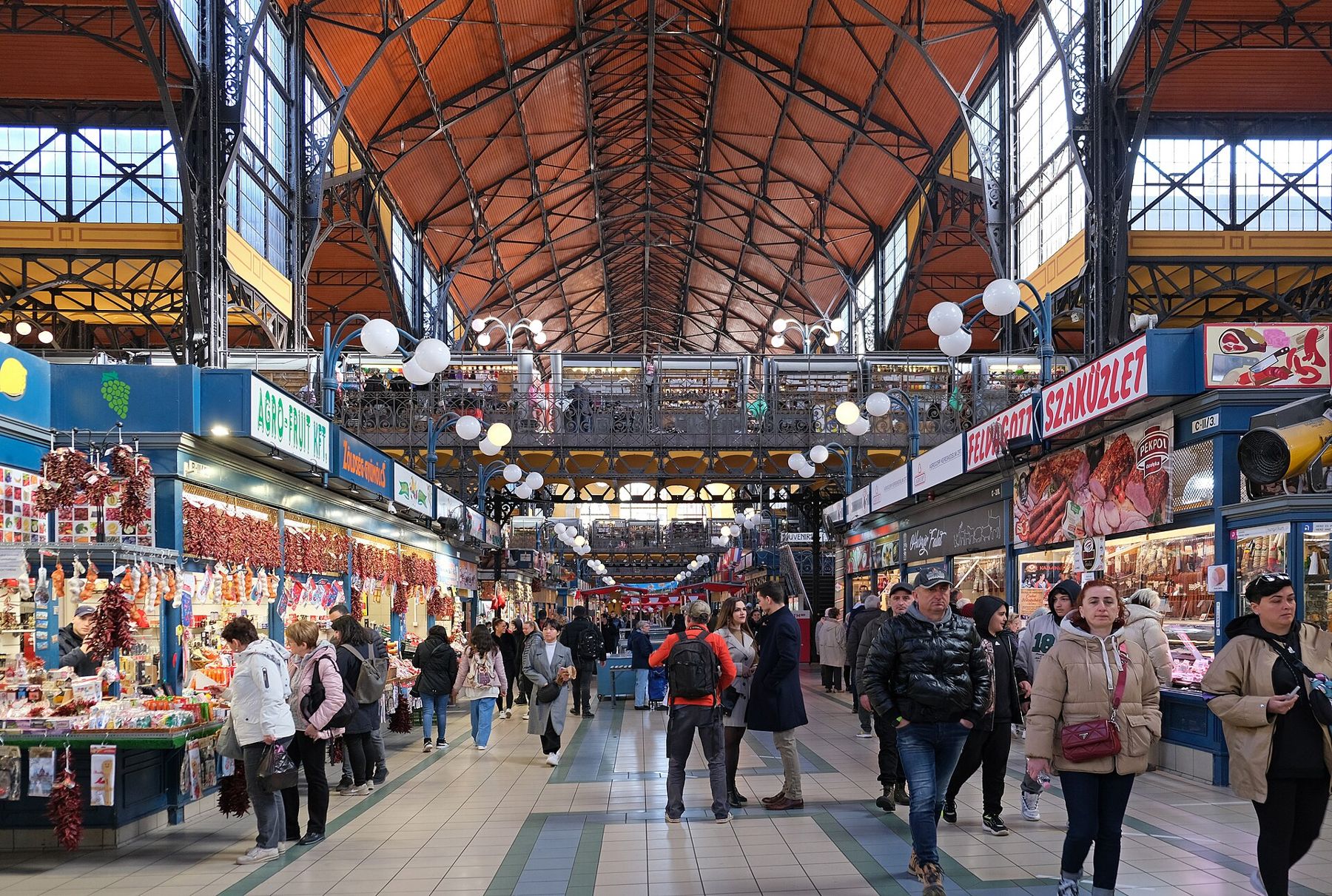
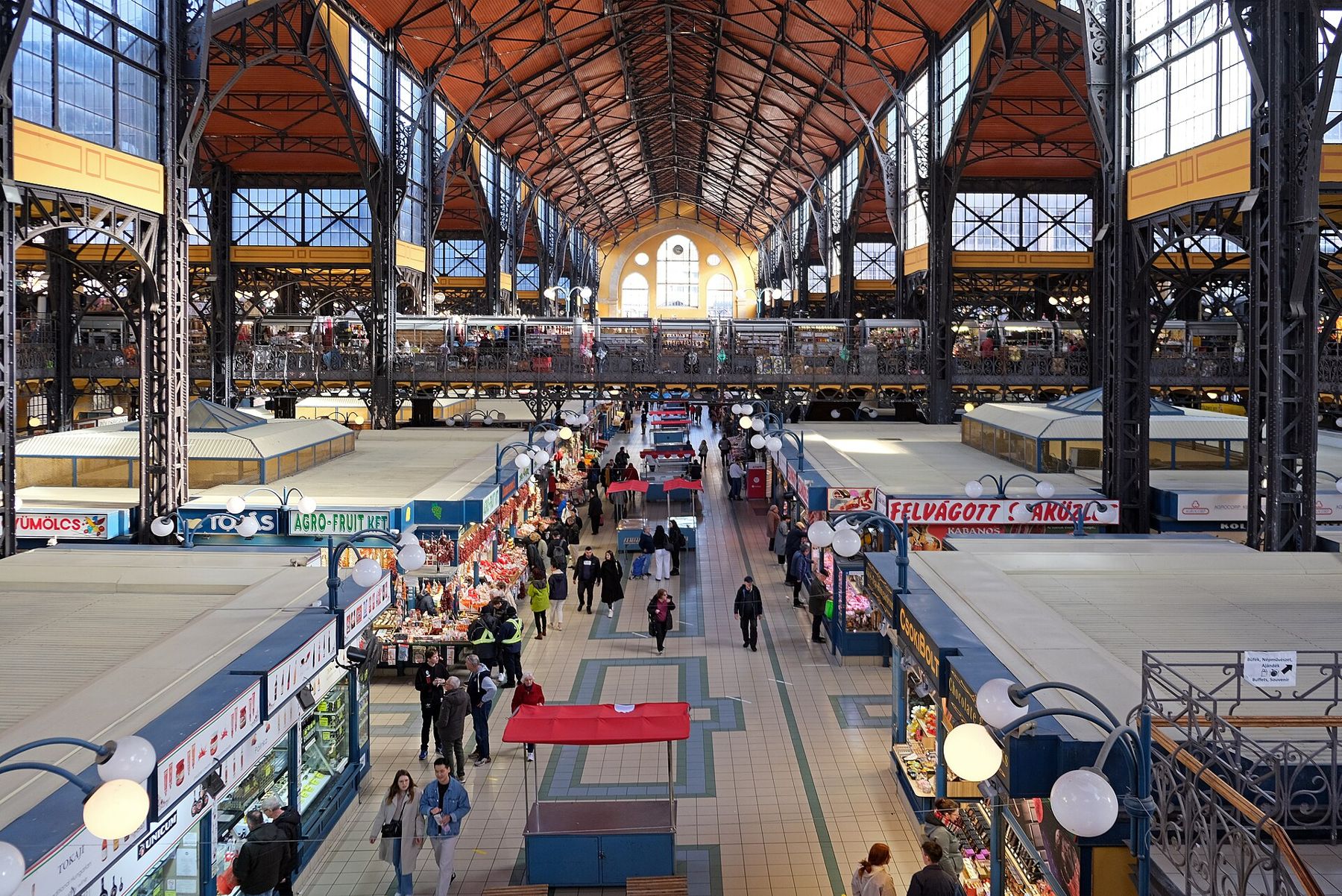
Budapest's Great Market Hall stands at the Pest end of Liberty Bridge. Opened at the end of the nineteenth century, it is a vast hall of iron and brick, with a colourful tiled roof and a soaring interior. The ground floor holds stalls of fruit, vegetables, meat, sausages, salami, paprika and pickles; the basement has fish and pickled vegetables; the upper gallery sells food and souvenirs.
It is open from morning into the afternoon, Monday to Saturday, and closed on Sundays. Go in the morning for the best choice and a calmer visit. Some stalls on the main floor cater mainly to visitors; the produce stalls along the sides are where residents shop.
Peppers and paprika
The peppers for lecsó are Hungarian wax peppers, long and pale yellow or light green, thin-walled and sweet, sometimes with a little heat. They are sold in heaps in summer. Bell peppers will do at a pinch, but the dish will taste different.
Paprika is the soul of Hungarian cooking. The market sells it in many grades, from sweet, édes, to hot, csípős, often in small cloth bags or tins. For lecsó, use sweet paprika, and add a little hot if you like. Buy a bag to take home; it is far better than most supermarket paprika.
At the stove
- Slice the onions. Core the peppers and cut them into rings or strips. Chop the tomatoes roughly.
- Heat a couple of tablespoons of oil, or lard as many Hungarians would, in a wide pan over a medium heat. Cook the onions gently for 8 to 10 minutes until soft and golden.
- If using sausage, add it now, sliced, and fry for a few minutes until it releases its oil.
- Take the pan off the heat and stir in a heaped teaspoon of sweet paprika. Paprika burns easily in hot fat, so do this off the heat.
- Return the pan to the heat, add the peppers and cook for about 10 minutes, stirring now and then, until they soften.
- Add the tomatoes and a good pinch of salt. Cook for another 10 minutes, until the tomatoes have collapsed and the stew is thick and glossy.
- If adding eggs, beat them lightly, pour them into the pan and stir gently until just set. Serve with bread.
Variations
Some cooks add a little rice to make the stew more filling, or serve it with boiled potatoes. In autumn, lecsó is often bottled for the winter. It can also be served as a side dish with grilled or fried meat, or used as a base for other dishes.
Tomorrow, from the same pan
Lecsó keeps well for two days in the fridge and tastes even better reheated. Leftover peppers can be stuffed or pickled, and the paprika will keep for months in a dry place. The market's sausages and salami make easy cold suppers with bread and pickles. For another vegetable dish from the summer markets, see Athens; for a different one-pan breakfast, menemen in Istanbul. Market hours change, so check them for Budapest before you go.
Inside the hall: what else to buy
The Great Market Hall is worth a slow walk even if you only need peppers. The ground floor's long aisles hold stalls of fresh fruit and vegetables, butchers selling fresh and smoked meats, and counters hung with sausages and salamis. Hungarian salami is famous, and the market sells many kinds. Strings of dried paprika peppers, garlic plaits and jars of pickled vegetables line the stalls. In the basement, fish counters and pickle sellers offer jars of pickled cabbage, cucumbers and peppers in every size.
The upper gallery has food stalls serving lángos, a deep-fried flatbread usually topped with sour cream, cheese and garlic, along with stews and sausages. It is busy at lunchtime and a good place to try Hungarian street food.
Paprika and how to keep it
Paprika loses its colour and flavour quickly when exposed to light, heat and air. Buy it in small amounts, keep it in a sealed tin or jar in a cool, dark cupboard and use it within a few months. At home, add it off the heat or at the end of cooking, since it burns and turns bitter easily. Good Hungarian paprika is deep red, slightly oily and smells sweet and fruity.
Besides sweet and hot, the market sells smoked paprika and paprika pastes in tubes which are useful for seasoning stews and sauces quickly.
The hall is busiest on Saturday mornings, when residents do their weekly shop; weekday mornings are calmer and better for asking stallholders questions.
Bring a sturdy bag: paprika, sausage and jars add up quickly, and the stairs to the upper gallery are steep.
The photographs on this page were shared by their photographers under open licences. Names and licences are on who took the market shots.