From the Bosphorus to the Atlas · Marrakech
A tagine without a tagine in Marrakech
The clay tagine is iconic, but the dish is about slow, gentle cooking in a covered pot. A heavy pan with a lid and a morning in the medina markets are enough.
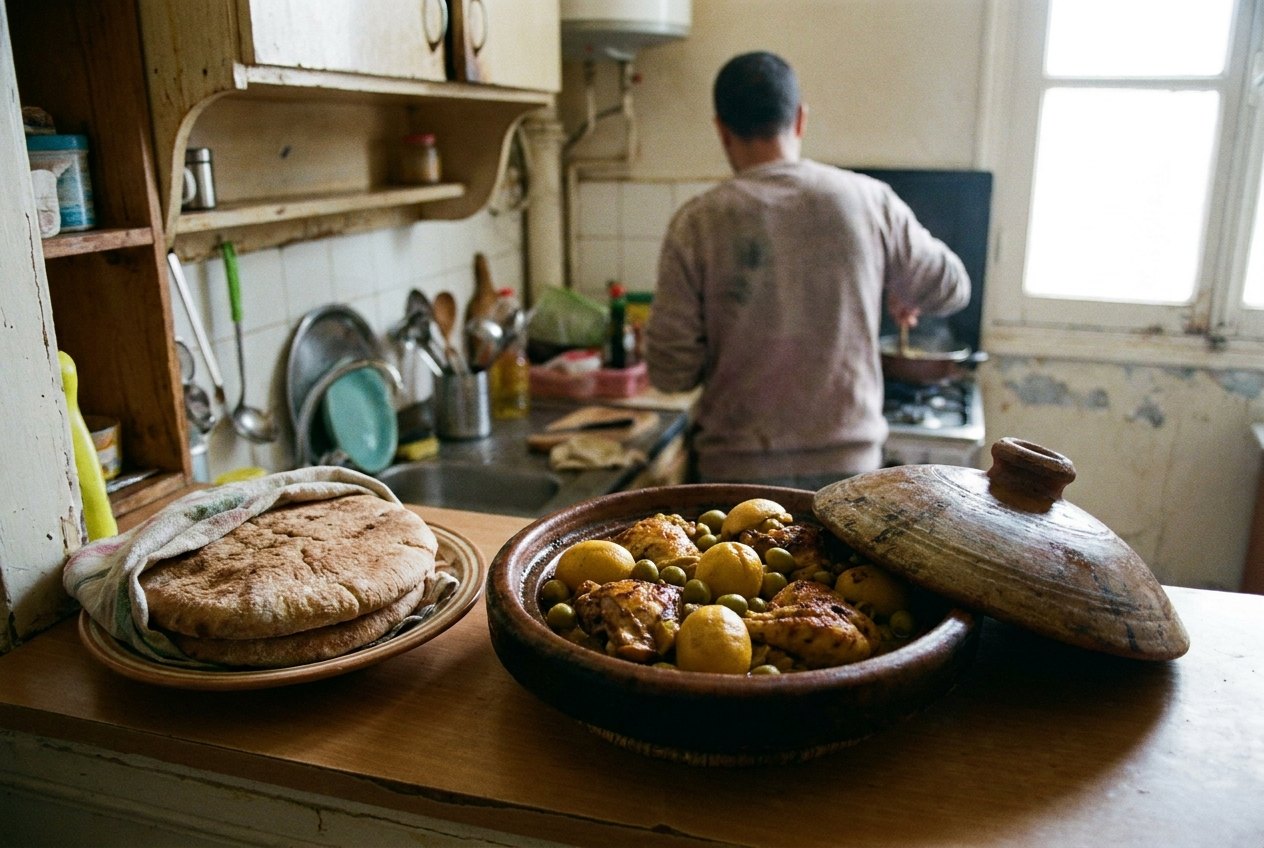
A tagine is both a dish and the pot it is cooked in: a shallow clay base with a tall conical lid, which traps steam and returns it to the food as it cooks slowly over a low heat. The pots are sold everywhere in Marrakech, and many visitors take one home. In a rented flat, a heavy pan or casserole with a tight-fitting lid, over a gentle flame, does the same job.
Chicken with preserved lemon and olives is one of the classic Moroccan tagines: chicken cooked slowly with onions, ginger, turmeric and saffron until tender, finished with the salty, sour tang of preserved lemon and a handful of olives.
Shopping in the Mellah and the medina
The Mellah, the old Jewish quarter of Marrakech's medina, has a covered market with stalls of spices, herbs, fruit, vegetables and household goods, as well as poultry and meat. It is more of a residents' market than the souks around the main square, and the spice stalls are piled with cones of ground spices, dried roses, saffron and blends.
Throughout the medina, small shops and stalls sell vegetables, olives and preserved lemons from great barrels. Poultry stalls sell chicken whole or in pieces. Prices for spices and souvenirs are often negotiable; for everyday food, they are usually fixed and modest.
Preserved lemons and olives
Preserved lemons are lemons cut open, packed with salt and left to ferment in their own juice for weeks. They become soft, intensely flavoured and salty. Only the rind is used in this dish; scrape away the flesh, rinse the rind and slice it. Olive sellers display many kinds: for this tagine, use green or violet olives, rinsed if they are very salty.
Spices are sold by weight. For this dish you need ground ginger, turmeric, a little saffron and black or white pepper. Ras el hanout, a complex house blend of many spices, is optional; a pinch adds depth.
At the stove
- Rub the chicken with salt, a teaspoon each of ground ginger and turmeric, black pepper, a crushed clove of garlic and a little olive oil. Leave for 30 minutes if you can.
- Slice the onions thinly. Soak a pinch of saffron in a few spoonfuls of hot water.
- Heat a few tablespoons of olive oil in a heavy pan with a lid. Add the onions and the chicken and cook gently for 10 minutes, turning the chicken, without browning it hard.
- Add the saffron water, a handful of chopped coriander and parsley, and enough water to come about a third of the way up the chicken.
- Cover tightly and simmer over a low heat for 45 minutes to an hour, turning the chicken occasionally, until it is very tender and the onions have melted into a thick sauce. Add a splash of water if needed.
- Add the sliced preserved lemon rind and the olives, and simmer uncovered for 10 minutes to thicken the sauce.
- Scatter with more chopped herbs and serve with bread.
The cooking water and the pot
The secret of a tagine is gentle heat and very little liquid. The clay pot's conical lid catches the steam and drips it back, so the meat braises in its own juices and the onions rather than boiling. In an ordinary pan, keep the lid on tight, use the lowest flame that keeps a gentle bubble, and add water only a little at a time. If your lid does not fit well, put a sheet of foil under it to seal the pan.
The onions are as important as the chicken: cooked slowly for an hour, they melt into a thick, golden sauce. Do not rush them by turning up the heat.
Buying spices without being overcharged
The spice stalls of the medina are a feast for the eyes, with pyramids of coloured powders, but prices for visitors can be high. Buy small amounts, ask the price before the seller starts weighing, and do not be shy about walking away politely. Saffron is the most expensive spice and the most often faked: real saffron is sold as fine red threads, not powder, and a small amount goes a long way. Turmeric, ginger and cumin are cheap everywhere.
Many cooks in Marrakech buy their ras el hanout from a trusted seller who mixes it to order. A small bag of it makes a good souvenir, and so do preserved lemons in a sealed jar.
Bread, not cutlery
In Morocco, tagines are eaten from the shared pot, using pieces of round bread to scoop up the meat and sauce with the right hand. Buy bread from a neighbourhood bakery or a stall in the medina; it is baked several times a day. Mint tea, strong and sweet, often follows the meal.
Leftovers and spices to take home
The tagine keeps well and tastes even better the next day. Leftover preserved lemons keep for months in their jar, and the spices you bought will scent your kitchen at home. For another slow dish from a market city, see Naples; for a quicker breakfast in another great market town, Istanbul's menemen. Market hours change, so check them for Marrakech before you go.
Leave enough time in the medina to get lost: it is the best way to find the small food stalls the guidebooks miss.
Most medina stalls open in the morning and close for a break in the hottest hours.
The photographs on this page were shared by their photographers under open licences. Names and licences are on who took the market shots.