From the Bosphorus to the Atlas · Istanbul
Menemen for a slow breakfast on the Asian side
Turkish breakfast can fill a table, but menemen needs only one pan: soft eggs stirred into tomatoes and green peppers, eaten straight from the pan with fresh bread.

Breakfast in Turkey is a feast of small plates: cheese, olives, tomatoes, cucumbers, honey, jams, eggs and endless glasses of tea. In a rented flat, a full spread is ambitious. Menemen is the answer: a pan of eggs gently scrambled into a sauce of ripe tomatoes and green peppers, seasoned with red pepper flakes and eaten straight from the pan with bread torn by hand.
It takes twenty minutes, needs one pan and one burner, and is best made with the tomatoes and peppers of a Turkish summer.
The market streets of Kadıköy
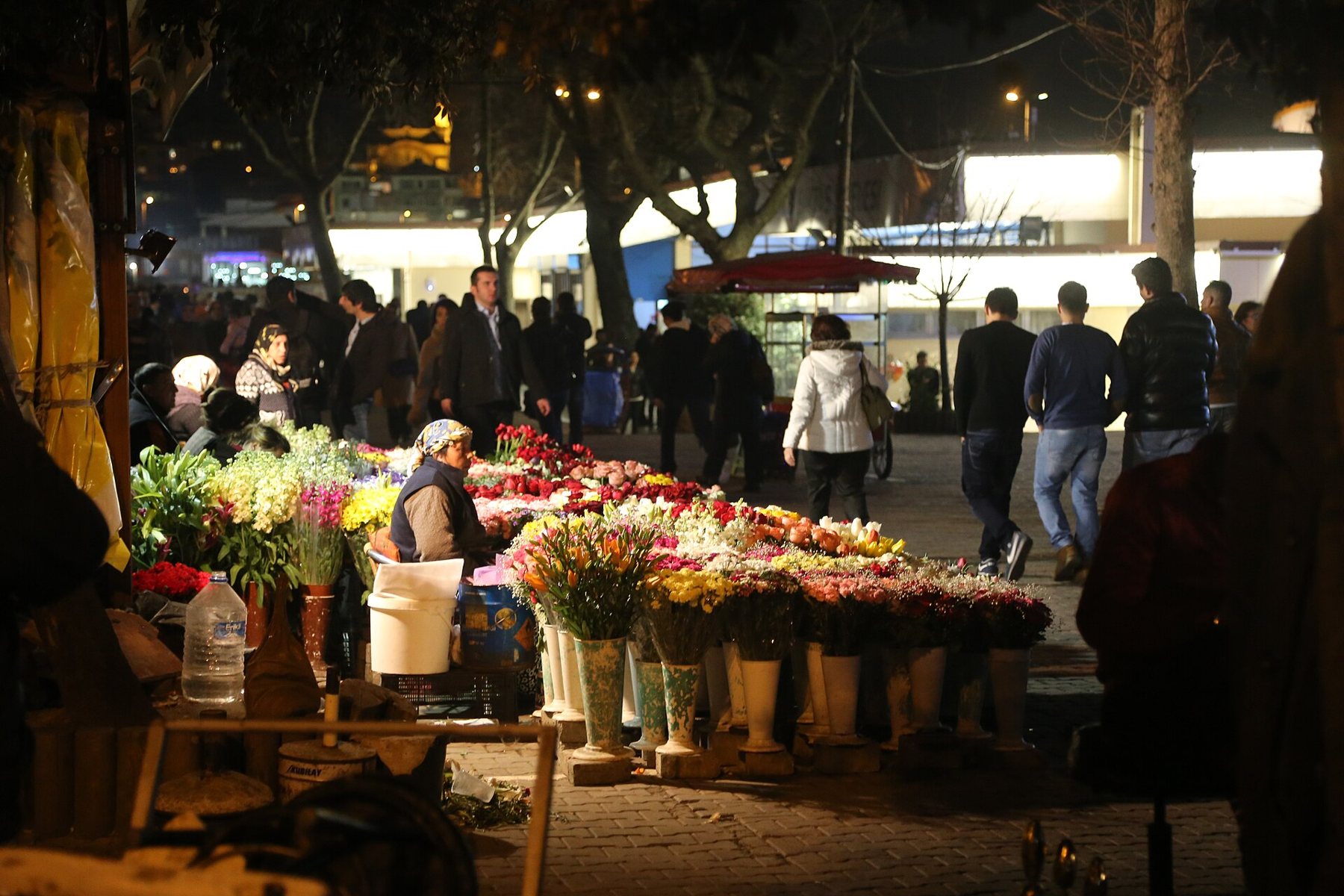
Kadıköy, on the Asian side of the Bosphorus, is a lively district of streets around the ferry pier, with food shops, fishmongers, greengrocers, delicatessens and bakeries packed into a few pedestrian streets. It is the best place in Istanbul to shop for food like a resident. The ferry across from Eminönü or Karaköy takes about twenty minutes, and the crossing, with gulls following the boat and tea served on board, is part of the trip.
Go in the morning, when the produce is fresh and the streets are not yet crowded. Greengrocers pile tomatoes, peppers, cucumbers and herbs in front of their shops. Spice shops sell pul biber by weight, along with other peppers and dried herbs. Bakeries sell fresh bread several times a day.
Like other districts, Kadıköy also has a weekly open-air market, a pazar, where farmers and traders sell produce from long rows of stalls. Market days vary by district; ask locally.
Choosing tomatoes and peppers
The tomatoes should be very ripe, soft and red, even a little overripe: they make the sauce. In summer, Turkish tomatoes are excellent. For peppers, look for the long, thin, pale green ones called sivri biber, or the slightly wider çarliston peppers. They are mild, with an occasional hot one. Avoid green bell peppers if you can; they taste different.
Pul biber, Turkish red pepper flakes, is mildly hot and slightly oily, with a fruity flavour. It is sprinkled on almost everything, and it is worth buying a bag to take home.
The onion question
Whether menemen should contain onions is one of the great food arguments in Turkey. Some say onion is essential, others that it ruins the dish. Both are found across the country. This version leaves them out, which makes it quicker and lets the tomatoes shine. If you like, add a small chopped onion with the peppers.
At the stove
Another list: BangkokBasil pork with a crisp fried egg, on a single hob- Cut the peppers into thin rings, discarding the stems and seeds. Grate the tomatoes on the large holes of a grater into a bowl, discarding the skins, or chop them finely.
- Melt a generous knob of butter, or warm a few spoonfuls of olive oil, in a frying pan over a medium heat. Add the peppers and cook for about 5 minutes until soft.
- Add the tomatoes with a pinch of salt and cook for 5 to 8 minutes, stirring now and then, until the juice has thickened into a sauce.
- Crack the eggs into the pan. Leave them for a moment, then stir gently, folding the egg into the sauce. Stop while the eggs are still soft and slightly runny; they will keep cooking in the hot pan.
- Sprinkle with pul biber, take the pan to the table and eat straight away with plenty of bread.
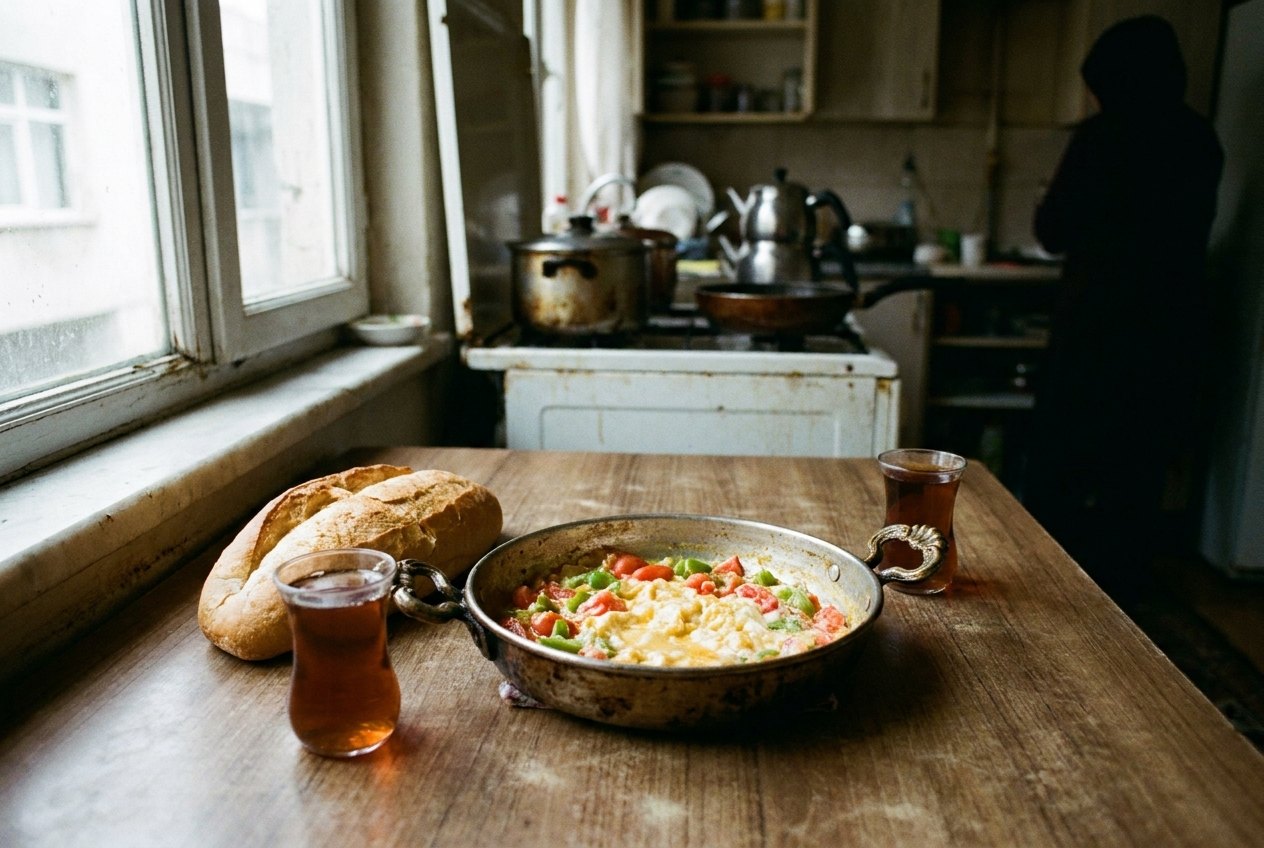
Eating it the Turkish way
Menemen is usually served in the pan it was cooked in, a small, two-handled copper or steel pan in Turkish homes and cafes. In a rented flat, a frying pan does the same job. Put it on a board in the middle of the table and dip bread straight into it. Pour black tea into small glasses, add sugar if you like, and refill often.
A plate of white cheese, olives, sliced cucumber and tomato makes a fuller breakfast without any more cooking.
Leftovers and the rest of the bag
Menemen does not reheat well, so make only what you will eat. Leftover peppers are good grilled or fried with eggs the next day. Extra tomatoes make a salad with cucumber, onion, parsley, lemon and olive oil. Bread that has gone stale makes toast. For another breakfast built on a market, see green chilaquiles in Mexico City; for a one-pan dish from the other end of Asia, try Bangkok's basil pork. Market days and hours change, so check them for Istanbul before you go.
The rest of a Turkish breakfast
If you want to build a fuller breakfast around the menemen, the Kadıköy shops sell everything you need ready to eat. Delicatessens offer white cheese, aged kaşar and spiced sucuk sausage, which can be sliced and fried in the same pan before the eggs. Olive shops sell a dozen kinds of black and green olives. Honey sellers have honeycomb, often eaten with kaymak, a thick clotted cream. Simit, the sesame-covered bread rings sold from carts and bakeries all over the city, are breakfast on the go.
Tea is essential. Turkish tea is brewed strong in a double teapot, the çaydanlık, and diluted with hot water to taste. Many rented flats have one; if not, a small pan and a strainer do the job. Serve it in small tulip-shaped glasses, without milk, with sugar on the side.
Ferries back to Europe run until late.
The photographs on this page were shared by their photographers under open licences. Names and licences are on who took the market shots.