The Americas · Oaxaca
Market breakfasts and a pan tlayuda in Oaxaca
Oaxaca's markets are some of the best places to eat in Mexico. The tlayuda, a huge crisp tortilla folded over beans, cheese and meat, can be made at home in a dry pan.
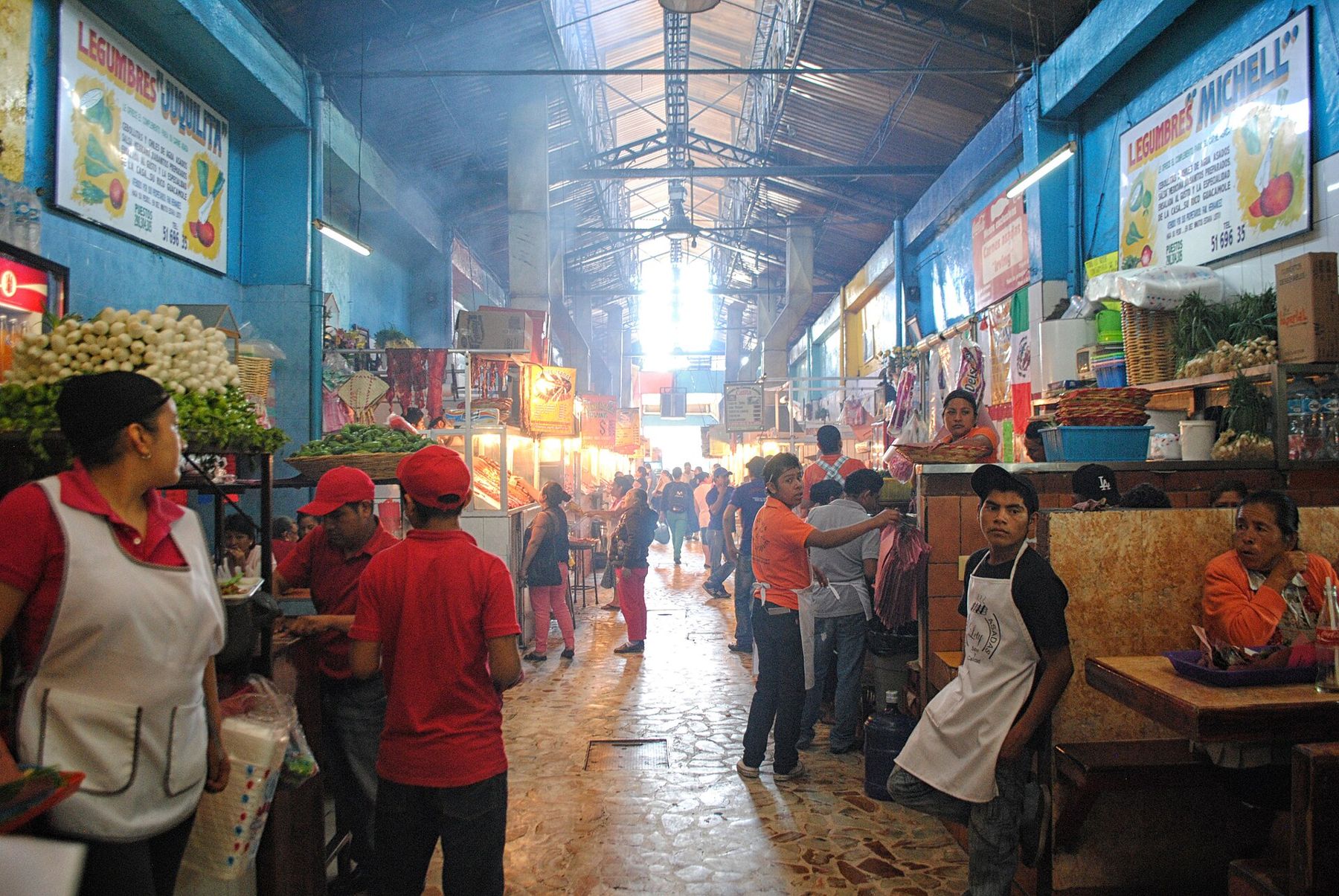
Oaxaca, in southern Mexico, is famous for its food: moles, chocolate, mezcal, grasshoppers and, above all, its markets. In the centre of the city, two great markets stand side by side, a few blocks south of the main square, full of food stalls, produce, bread, cheese, chocolate and crafts. Eating breakfast at a market counter is one of the great pleasures of a visit.
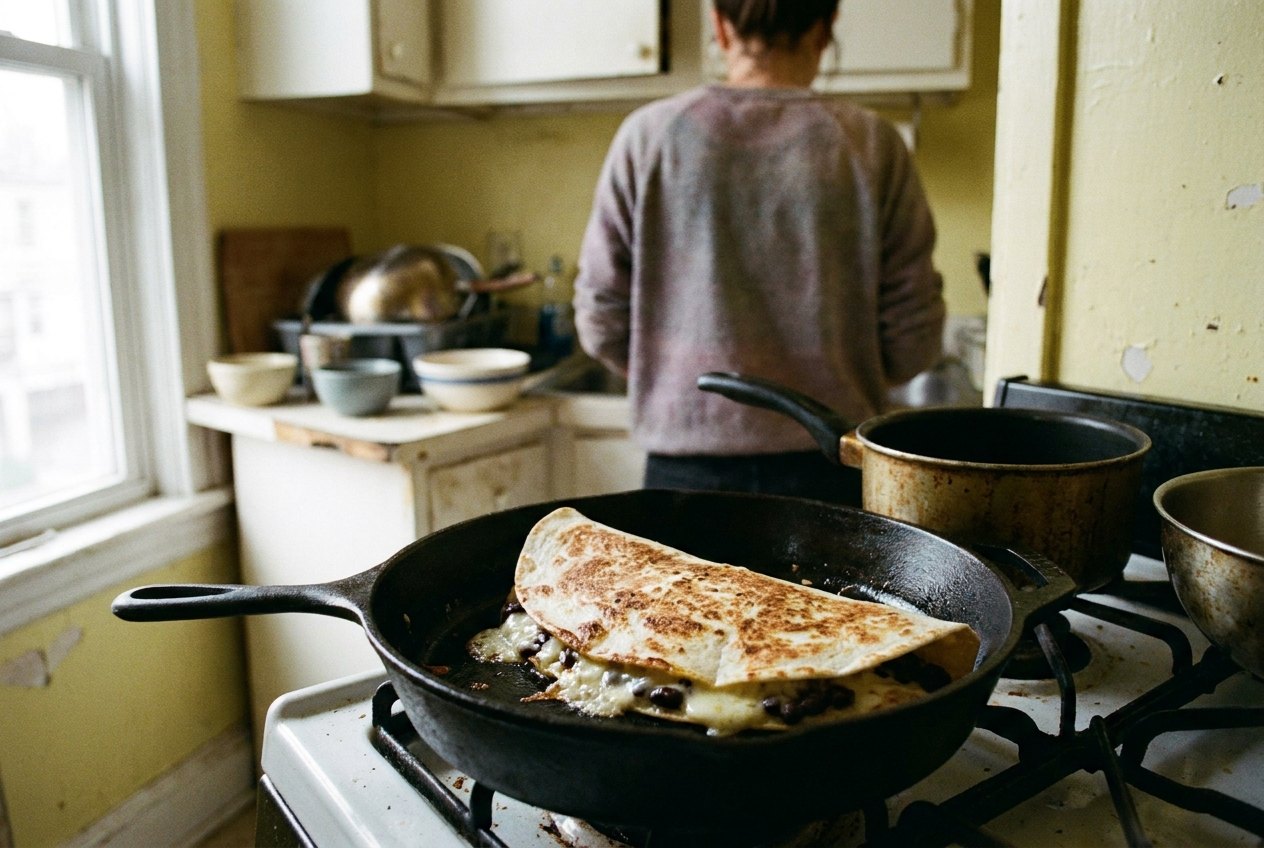
The tlayuda is Oaxaca's best-known street food: a very large, thin corn tortilla, partly dried so it is crisp and chewy, spread with asiento, unrefined pork lard, and black beans, topped with stringy quesillo cheese and grilled meat, folded and toasted over charcoal. In a flat, a dry frying pan does a good job.
The two markets
The Mercado 20 de Noviembre is famous for its smoky corridor of grills, where you choose raw meat from butchers, hand it to a cook to grill over charcoal and eat it with tortillas, salsa and vegetables at long tables. It also has stalls serving moles, soups and breakfasts.
The Mercado Benito Juárez, next door, sells everything else: fruit, vegetables, chiles, cheese, bread, chocolate ground with sugar and cinnamon, flowers, baskets and crafts. Grasshoppers, chapulines, toasted with lime, chile and salt, are sold by the scoop from great baskets; they are crunchy, salty and worth a try.
Into the basket
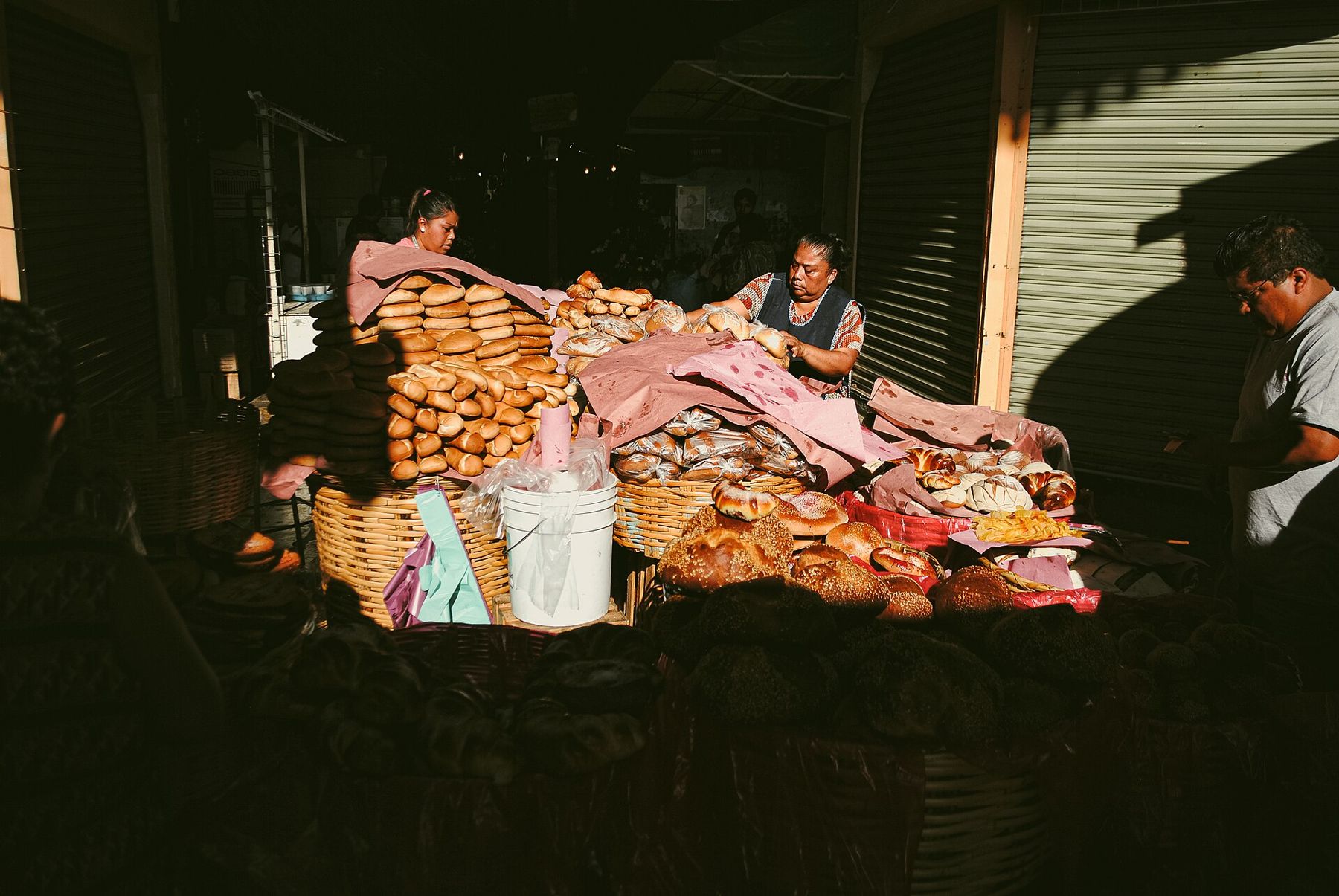
Tlayudas are sold by women at stalls in the markets, stacked in baskets; they are much larger than ordinary tortillas, and partly dried. Quesillo, the stringy cheese also called Oaxaca cheese, is sold wound into balls; pull it into strands. Tasajo is thin, salted, air-dried beef; cecina is thin pork marinated in chile. Both are sold at the butchers' stalls and cooked quickly in a hot pan.
Refried black beans are sold ready-made in tubs or bags, often flavoured with avocado leaves. Asiento is sold in small bags at the butchers; it is optional but traditional.
At the stove
- Heat a dry frying pan over a high heat. Cook the tasajo or cecina for 1 to 2 minutes a side until browned. Slice into strips.
- Warm the beans in a small pan on the second burner, loosening them with a little water.
- Wipe the frying pan and lower the heat to medium. Lay a tlayuda in it; if it is larger than the pan, it will curl up at the edges, which is fine.
- Spread a thin layer of asiento if you have it, then the beans, over the tlayuda. Scatter the pulled quesillo over half of it and add the meat.
- Fold the tlayuda in half and press it down gently. Toast for 2 to 3 minutes on each side, until crisp and the cheese has melted.
- Serve with shredded cabbage, sliced avocado, lime and salsa on the side, or tucked inside.
Moles, chocolate and what else to buy
Oaxaca is called the land of seven moles, for the rich sauces that are the region's pride. The markets sell mole pastes, black, red, yellow and green, by weight; at home, a spoonful dissolved in stock makes a quick sauce for chicken or eggs. Ask to taste before you buy. Oaxacan chocolate, ground with sugar and cinnamon and pressed into rough tablets, is sold at stalls and in shops around the markets. It is meant for drinking, whisked into hot water or milk until foamy.
Fresh cheese, chiles of every shape and colour, herbs such as hoja santa and pitiona, and seasonal fruits fill the other aisles. In autumn, around the Day of the Dead, the markets fill with marigolds, sugar skulls and special breads.
Charcoal versus pan
A tlayuda cooked over charcoal on a street corner picks up a smoky flavour that a pan cannot give. To get closer at home, use a heavy pan and let the tortilla toast slowly until it has dark spots and is really crisp. Some cooks press it down with a second pan or a plate. The important thing is that the tortilla becomes crisp rather than chewy, and the cheese melts completely inside.
If the tlayudas you bought are very dry and brittle, sprinkle them with a few drops of water before heating so they soften enough to fold.
Water and safety
As in the rest of Mexico, drink bottled or purified water, and use it to rinse anything eaten raw, such as the cabbage. Market food cooked in front of you is generally a good choice; choose busy stalls.
Breakfast at the market
Before you cook, eat at the market. Counters serve hot chocolate made with water or milk, with sweet egg bread for dunking, and plates of eggs, beans and tortillas. It is the best introduction to Oaxacan food. For more Mexican market cooking, see green chilaquiles in Mexico City, or for a Korean stew with a similar market spirit, Seoul. Market hours change, so check them for Oaxaca before you go.
On market days, arrive early; by midday the aisles are crowded, the grill corridor is full of smoke and the best tlayudas have been sold.
The two markets stand side by side a couple of blocks south of the Zócalo, so it is easy to shop in one, eat in the other and be back in the old centre within the hour, carrying bread, cheese and a bag of chocolate for later.
The photographs on this page were shared by their photographers under open licences. Names and licences are on who took the market shots.