Europe's market halls · Athens
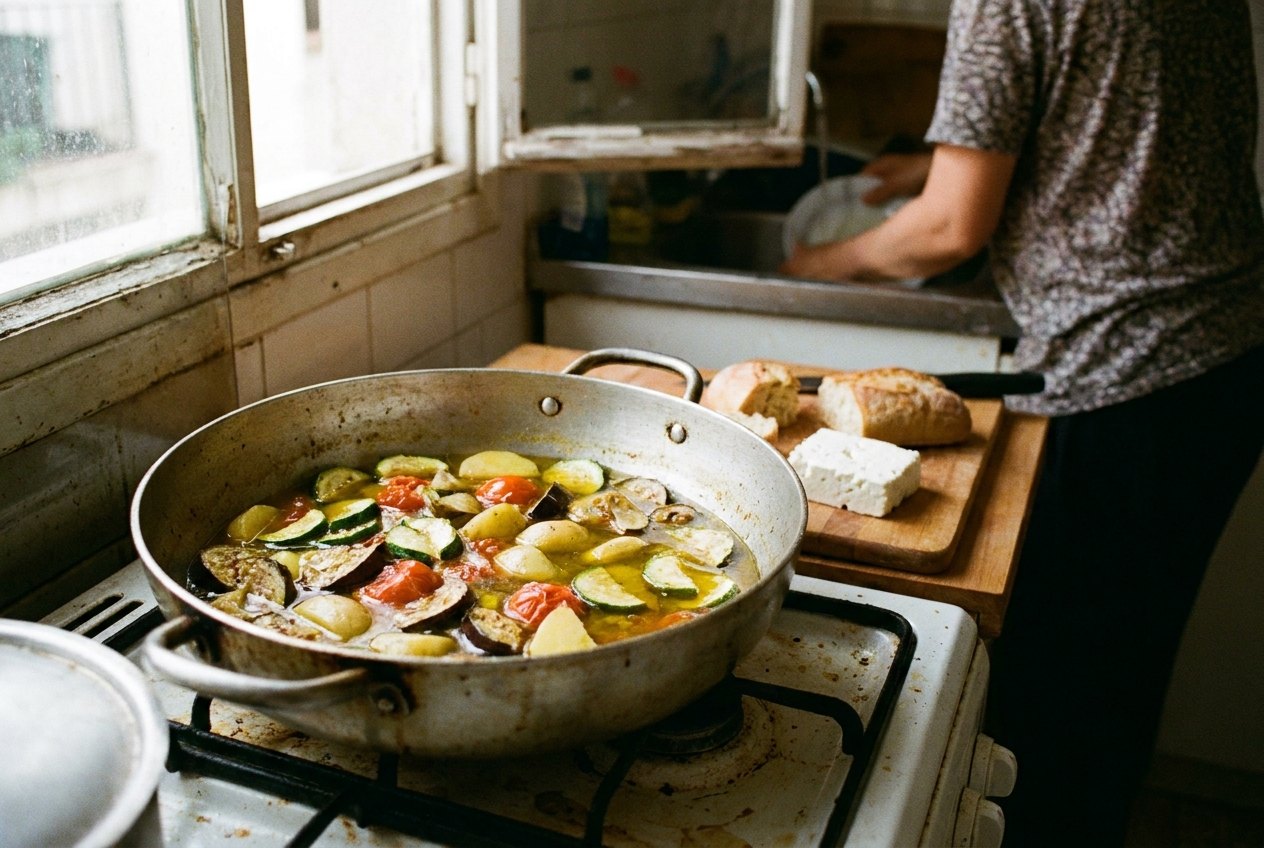
Summer vegetables on the hob in Athens
Briam is the Greek summer in a dish: vegetables cooked slowly in plenty of olive oil until soft and sweet. Without an oven, a wide covered pan on the hob does the job.
In a Greek summer, vegetables are the main event. Tomatoes, courgettes, aubergines, peppers and potatoes are cooked slowly in generous amounts of olive oil until they are meltingly soft, and eaten warm or at room temperature with bread and a slab of feta. These dishes are called ladera, from the word for oil, and briam is one of the best known: a mixture of summer vegetables usually baked together in the oven.
Many rented flats in Athens have only a hob. A wide pan with a lid, a low flame and some patience produce a stovetop version that keeps the spirit of the dish: soft vegetables, sweet tomatoes and plenty of olive oil to mop up with bread.
The central market and the laiki
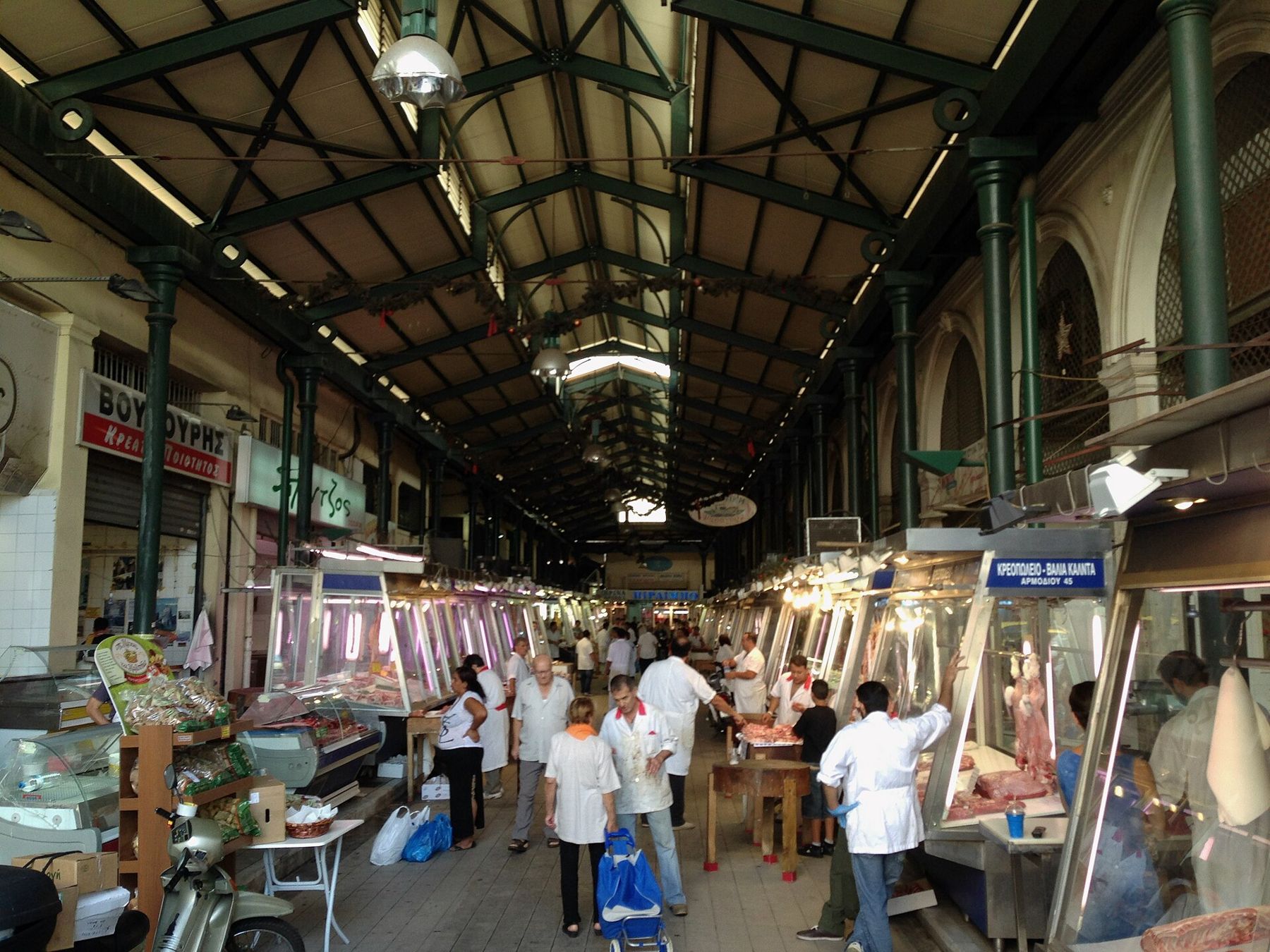
The Varvakios Agora, Athens' central market, stands on Athinas Street between Monastiraki and Omonia. Its main hall is a nineteenth-century building full of meat and fish stalls, loud and busy in the mornings. Across the street, the fruit and vegetable market fills a large open area with stalls of produce, herbs, olives and spices. Shops around it sell cheese, cured meats, nuts and dried fruit.
Every neighbourhood in Athens also has a weekly street market, the laiki, where farmers and traders set up stalls along a street for one morning. It is the best place to buy summer vegetables, often picked the day before. Ask at your flat which day the nearest laiki takes place, and go early.
Choosing the vegetables
Choose firm courgettes and a glossy, heavy aubergine. Waxy potatoes hold their shape better. The tomatoes should be very ripe: they become the sauce. Buy a bunch of flat-leaf parsley and a head of garlic. At the cheese stall, ask for feta from the barrel, kept in brine, which is creamier and tangier than the packaged kind.
Greek olive oil is excellent and cheap at the markets, often sold in large tins or plastic bottles. For this dish you will use a lot of it.
At the stove
- Slice the potatoes into thin rounds, about half a centimetre thick. Cut the courgettes and aubergine into rounds or chunks of a similar size. Slice the onion and garlic. Grate or chop the tomatoes.
- Pour a generous layer of olive oil into a wide, heavy pan with a lid. Soften the onion over a medium heat for about 5 minutes, then add the garlic.
- Add the potatoes in a layer, season with salt and pepper, and cook for 5 minutes, turning once.
- Add the aubergine and courgettes on top, then the tomatoes, a good pinch of salt, pepper and a little oregano if you have it. Pour over a little more olive oil and a splash of water.
- Cover the pan and cook over a low heat for 30 to 40 minutes, stirring gently once or twice, until the potatoes are tender and the vegetables are very soft. Add a splash of water if it starts to stick.
- Take the lid off for the last 5 minutes to let the sauce thicken. Stir in chopped parsley.
- Serve warm or at room temperature with feta and bread.
Feta, bread and what goes alongside
A Greek table rarely has one dish on it. With the vegetables, put out a thick slice of feta drizzled with olive oil and sprinkled with oregano, a plate of olives and a basket of bread. A simple salad of tomato, cucumber, onion and green pepper, the horiatiki that visitors call a Greek salad, needs only a knife and a bowl. Together they make a full summer meal from one pan and a few minutes of chopping.
Bakeries in every neighbourhood sell fresh bread, sesame-covered rings called koulouri for breakfast and pies filled with cheese or spinach. Buy bread in the morning; it is best the same day.
If you want protein, the butchers at the central market sell sausages and lamb chops that can be fried quickly in a pan, and fishmongers sell small fish that can be dusted in flour and fried. Neither needs an oven.

Why so much oil
Visitors are often surprised by the amount of olive oil in Greek vegetable dishes. It is deliberate. The oil carries the flavour of the vegetables and the tomatoes, softens them as they cook and becomes a sauce in its own right. Greeks consume more olive oil per person than almost anyone in the world, and much of it goes into dishes like this one. Use less if you prefer, but the dish will be drier and less rich.
Good Greek olive oil is a fine thing to take home, and the markets sell it in sealed tins that travel well in checked luggage.
Room temperature is right
Greeks often eat ladera warm rather than hot, or at room temperature, especially in summer. The flavours develop as the dish rests, and the oil and juices are best mopped up with bread. It is also a dish that improves overnight, which makes it a good choice for cooking once and eating twice.
Tomorrow, from the same pan
Leftover briam keeps for two days in the fridge; let it come back to room temperature before eating. It also makes a good base for baked eggs: make hollows in the vegetables, crack in eggs, cover and cook until set. For another summer vegetable dish from a market city, see lecsó in Budapest; for a Mediterranean rice, Valencia. Market days and hours change, so check them for Athens before you go.
The photographs on this page were shared by their photographers under open licences. Names and licences are on who took the market shots.