Asia's wet markets · Hanoi
Bún chả from a skillet, for a flat with no charcoal
Hanoi's famous lunch is grilled pork in a sweet, sour dipping sauce with rice noodles and a heap of herbs. Without a charcoal brazier, a hot skillet comes surprisingly close.
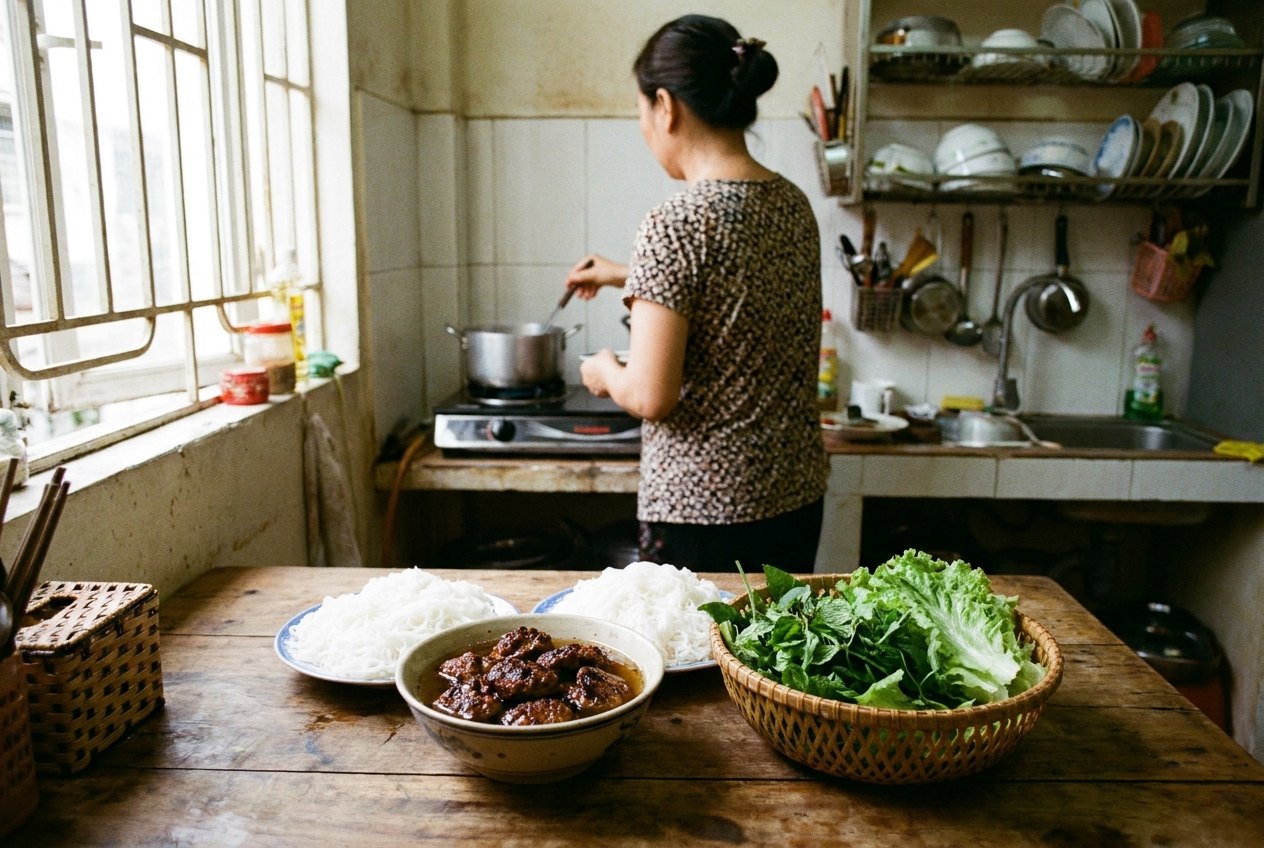
In Hanoi, bún chả is a lunchtime ritual. In the late morning, small shops and street stalls fan charcoal braziers on the pavement, grilling pork patties and slices of belly over the coals, and the smoke drifts down the street. The grilled pork is served floating in a bowl of warm, sweet and sour dipping sauce, with a plate of soft rice noodles and a basket of lettuce and herbs on the side. You dip the noodles and herbs into the sauce and eat everything together.
A rented flat with no charcoal can still make a good version. The trick is to caramelise the pork well in a hot skillet, so it picks up the dark, sticky edges that the grill would give.
Hanoi's neighbourhood markets
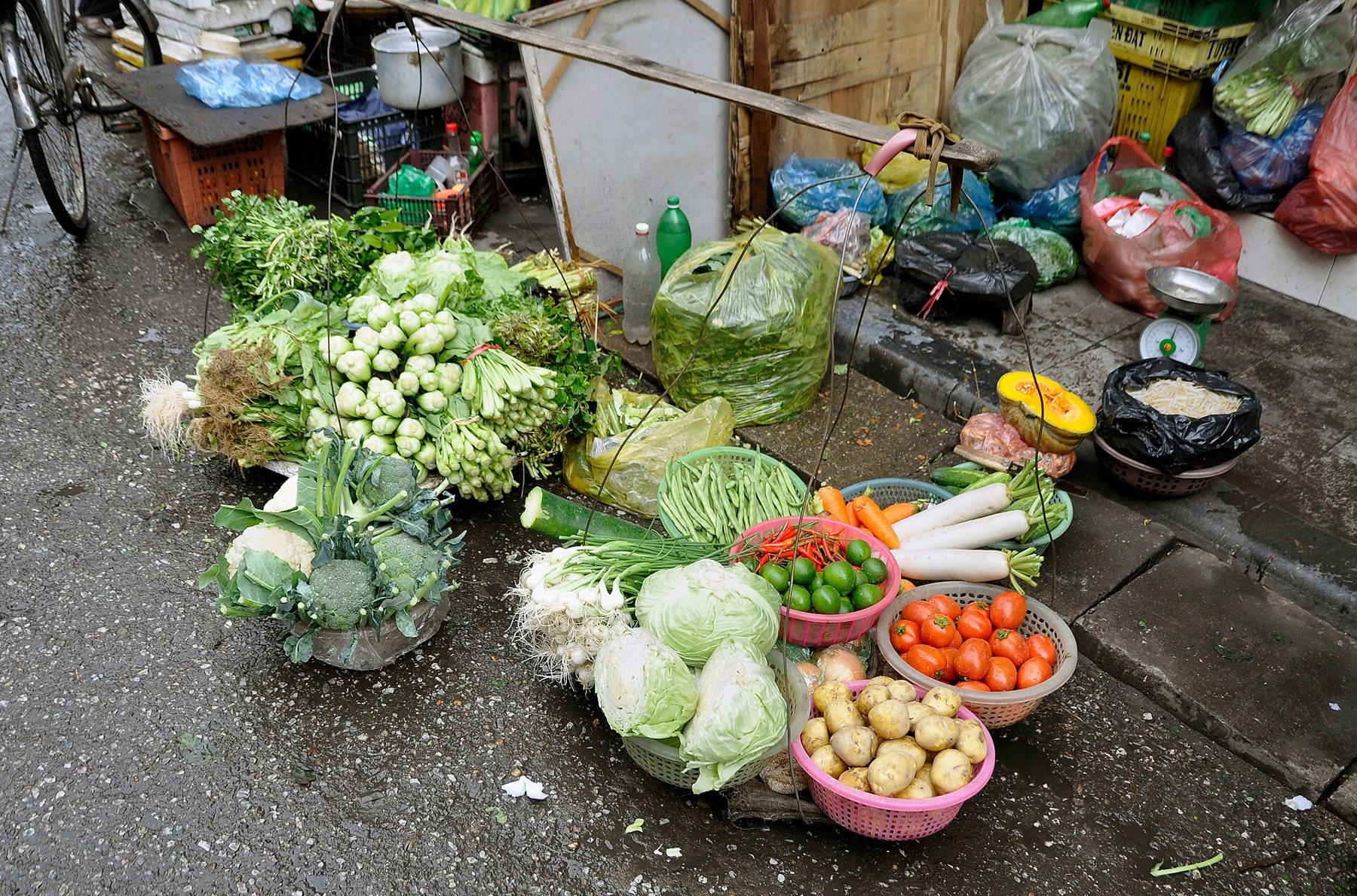
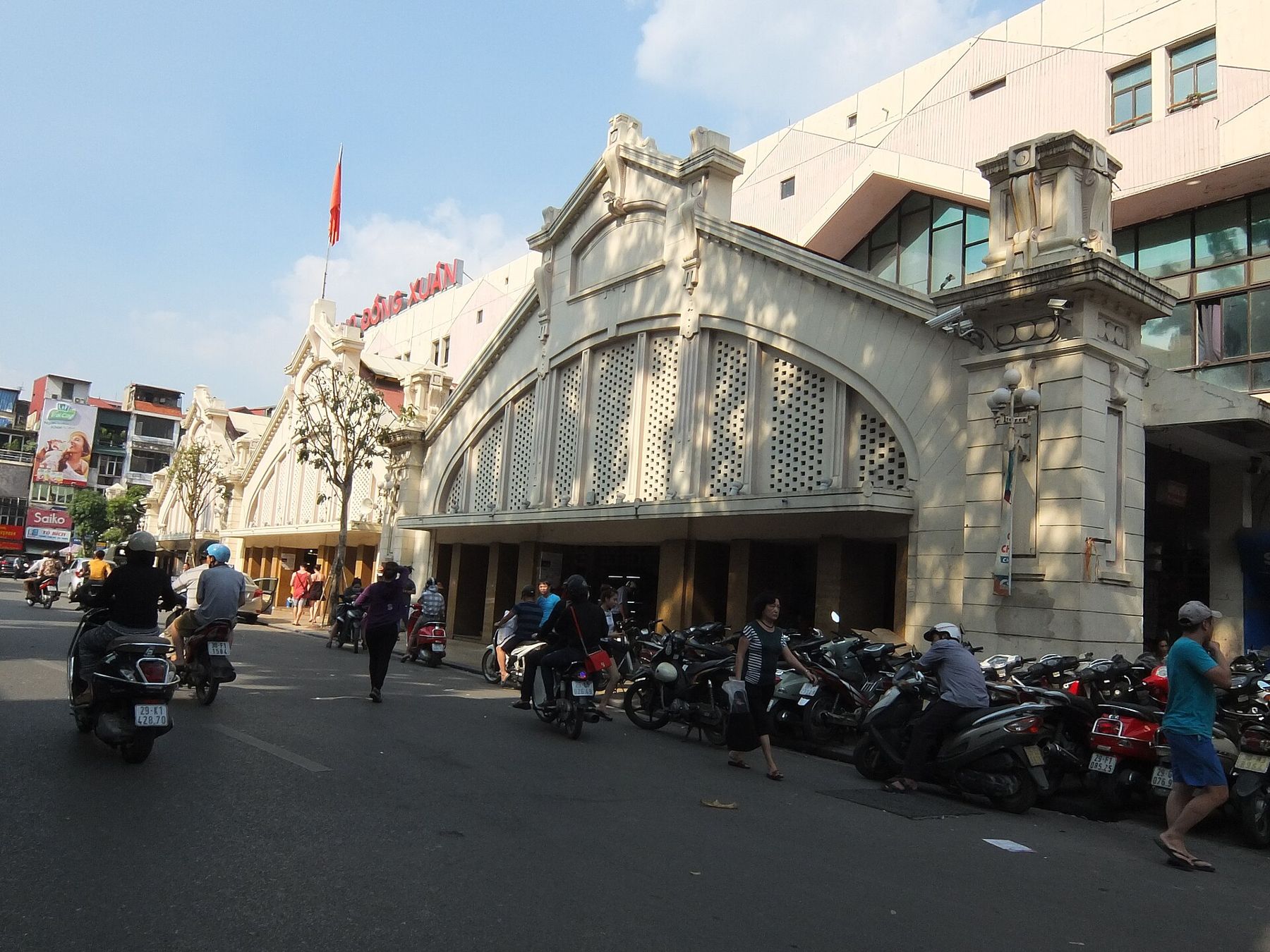
Every neighbourhood in Hanoi has its own market, a cluster of stalls under a roof or along a lane, open from early morning. Chợ Hôm, in Hai Bà Trưng district, is one of the older covered markets, with fabric upstairs and food on the ground floor. Đồng Xuân, on the edge of the Old Quarter, is the biggest, more wholesale than retail. The best is often the one nearest your flat, where the stallholders sell to the same families every day.
Go early, before eight if you can, when the meat is freshest. Buy pork from a busy butcher's stall; ask for shoulder or belly with a little fat, and some minced pork. The noodle sellers have bags of fresh bún, soft, round rice noodles, made that morning. Herb sellers will make up a bag of lettuce, perilla, Vietnamese balm, coriander and mint if you ask for herbs for bún chả.
Washing herbs safely
Tap water in Hanoi is not considered safe to drink. Wash the herbs and lettuce in bottled water, or in boiled water left to cool, and dry them well. Soak them briefly, lift them out so the grit stays in the bowl, and repeat. This is the one step not to skip.
At the stove
- Slice the pork shoulder thinly. Finely chop 2 shallots and 2 cloves of garlic.
- Mix the sliced pork and the minced pork in separate bowls, each with half the shallot and garlic, 1 tablespoon of fish sauce, 1 tablespoon of sugar, a good grind of black pepper and a little oil. Leave for at least 30 minutes.
- Make the sauce: stir 3 tablespoons of fish sauce and 3 tablespoons of sugar into 200 ml of warm water until the sugar dissolves. Add the juice of half a lime, a chopped clove of garlic and sliced chilli. Taste: it should be sweet, sour and salty in balance.
- Shape the minced pork into small flat patties.
- Heat a heavy skillet over a high heat with a little oil. Cook the patties and the pork slices in batches for 2 to 3 minutes a side, until well browned and caramelised at the edges. Do not crowd the pan.
- Warm the sauce gently in a small pan on the second burner. Put the pork into two bowls and pour the warm sauce over it.
- Rinse the noodles in hot water to loosen them and drain. Serve with the herbs and lettuce on a plate.
Pickled papaya, if you have time
In Hanoi, the dipping sauce often has thin slices of green papaya and carrot floating in it, lightly pickled. Slice a little green papaya and carrot thinly, toss with a pinch of salt and sugar and a splash of vinegar, and leave for half an hour before adding to the sauce. It adds crunch and freshness. Many markets sell green papaya already shredded.
Dip, wrap, repeat
Take a small bundle of noodles with your chopsticks, dip it into the bowl of sauce and pork, add herbs and lettuce torn by hand, and eat. Some people tip noodles straight into the bowl. Add more chilli or garlic from the table to taste. It is messy, fragrant and very satisfying.
Tomorrow, from the same pan
Cooked pork keeps for a day in the fridge and makes a good filling for a bánh mì, with pickles, herbs and chilli in a fresh baguette from the bakery. Leftover herbs wilt quickly; use them in a soup or an omelette. Fresh rice noodles harden in the fridge but soften again in hot water. For another dish from a regional market, see Bangkok's basil pork, or for a Korean stew made from market kimchi, Seoul. Market hours change, so check them for Hanoi before you go.
Buying from a Hanoi market
Hanoi's markets can feel chaotic, with motorbikes edging through the aisles and stallholders calling out. Most sellers are used to visitors and happy to help. Prices for produce are usually modest, and many stallholders weigh goods on small scales. It helps to know a few words: bao nhiêu means how much, and cảm ơn means thank you. Carry small notes, as change can be scarce early in the morning.
Meat is sold from open counters and is best bought early, when it has just arrived. Cook it the same day, and keep it cold on the way home in hot weather. Herbs and vegetables are cheap and plentiful, so buy generously: a basket of herbs is half the pleasure of bún chả.
The photographs on this page were shared by their photographers under open licences. Names and licences are on who took the market shots.