Europe's market halls · Palermo
Pasta with sardines and wild fennel, from Ballarò
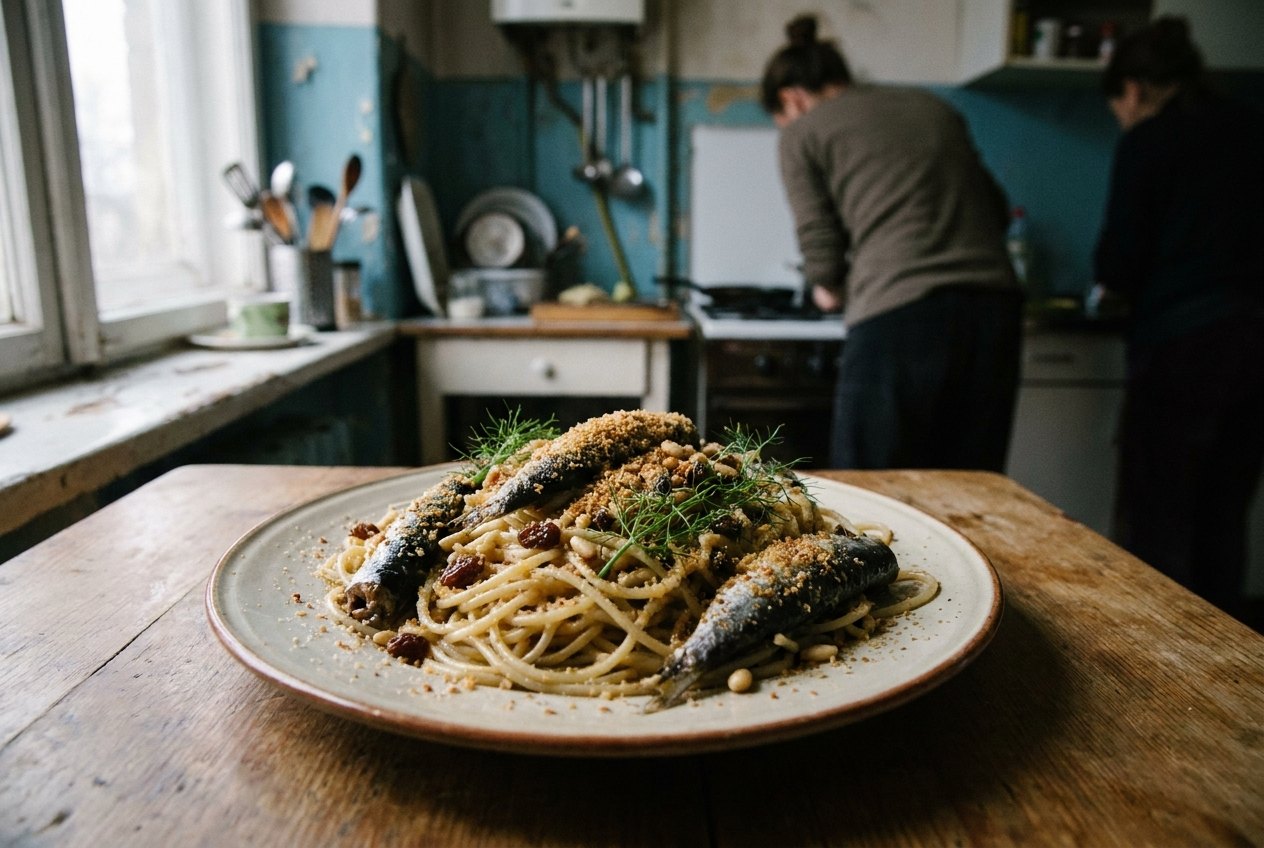
Palermo's signature pasta mixes the sea and the hills: fresh sardines, feathery wild fennel, raisins and pine nuts, finished with toasted breadcrumbs instead of cheese.
Pasta con le sarde is the dish of Palermo. It brings together fresh sardines from the sea, wild fennel from the hills, raisins and pine nuts, a touch of saffron, and breadcrumbs toasted in a dry pan and scattered on top. The combination of sweet, savoury and aniseed flavours is often traced back to the Arab rule of Sicily a thousand years ago, when raisins, pine nuts and saffron arrived in the island's kitchens.
It is a dish of the winter and spring, when wild fennel grows on the hillsides around the city and sardines are plentiful. It needs two burners: one for the pasta water, one for the sauce.
Ballarò, the oldest market
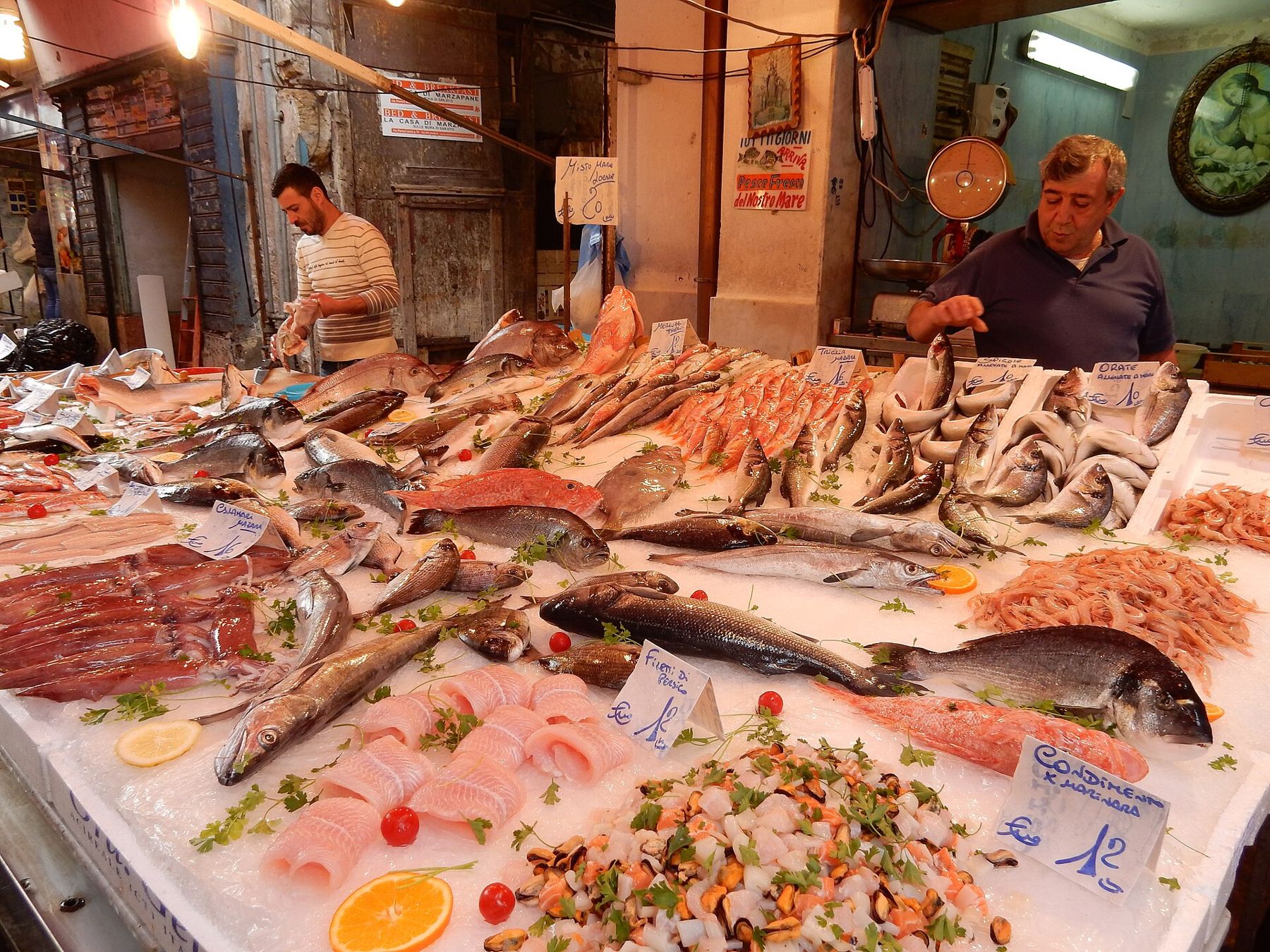
Ballarò is the oldest and largest of Palermo's street markets, spread through the narrow lanes of the Albergheria district, between the Royal Palace and the railway station. It is loud, colourful and chaotic, with stallholders shouting their wares in Sicilian, fish laid out on marble slabs, piles of citrus, artichokes and cauliflowers in purple and green, and stalls frying chickpea fritters and selling boiled octopus. The market is busiest in the mornings, and many stalls close in the early afternoon.
The Capo market, near the cathedral, is similar, and the old Vucciria, near the harbour, is smaller today and livelier at night. Any of them will sell what you need.
Sardines and wild fennel
At the fish stalls, ask for sardines cleaned and opened into fillets, a deliberately fiddly job that the fishmongers do quickly. Fresh sardines should be bright, firm and smell of the sea. Use them the same day.
Wild fennel, finocchietto selvatico, is not the bulb fennel of the vegetable stall but a tall, feathery wild plant with a strong aniseed scent. In season, it is sold in bunches at the greengrocers. Out of season, some Palermo cooks use the green tops of bulb fennel with a few fennel seeds, which is a fair compromise.
At the stove
- Wash the wild fennel and boil it in a large pan of salted water for about 10 minutes. Lift it out, keep the water for the pasta, squeeze the fennel dry and chop it finely.
- Soak a handful of raisins in warm water. Toast a handful of pine nuts in a dry frying pan until golden, and tip them out. Toast 4 tablespoons of breadcrumbs in the same dry pan, stirring, until golden and crisp; tip them out.
- Dissolve a pinch of saffron in a few spoonfuls of hot water.
- Warm a generous amount of olive oil in the frying pan. Gently cook a chopped onion until soft, then add two anchovy fillets and stir until they melt.
- Add the sardine fillets and cook gently, breaking them up with a wooden spoon. Add the chopped fennel, the drained raisins, the pine nuts and the saffron water. Simmer for 10 minutes, adding a ladle of the fennel water if it looks dry. Season.
- Bring the fennel water back to a boil and cook the pasta until just al dente. Drain, keeping a cup of water.
- Toss the pasta in the sauce with a splash of the water until well coated. Serve with the toasted breadcrumbs scattered over the top.
Breadcrumbs, not cheese
In Sicily, toasted breadcrumbs, muddica atturrata, often replace grated cheese on pasta dishes with fish. They were once called the poor man's parmesan, used by those who could not afford cheese, and they give a crunch that works beautifully with the soft sardines. Do not add cheese to this dish in Palermo unless you want to start an argument.
The smell of fennel and fish
Boiling wild fennel fills the flat with a strong aniseed smell, and cooking sardines adds a fishy note. Open the windows and switch on the extractor. Bag the fish trimmings and take them out with the rubbish promptly.
Leftovers and the market's other treats
Pasta con le sarde is good cold the next day, and in Palermo it is sometimes baked into a crisp-topped pie. The market's street food, such as panelle, chickpea fritters eaten in a soft bun, and arancine, fried rice balls, makes an easy lunch without cooking. Blood oranges in winter and cherries and apricots in early summer need nothing but a knife. For another market dish from southern Italy, see pasta and potatoes in Naples; for sardines cooked a different way, see Lisbon. Market hours change, so check them for Palermo before you go.
Street food at the market
Palermo is one of the great street-food cities of Europe, and its markets are where much of that food is made and eaten. Panelle, thin fritters of chickpea flour, are fried to order and stuffed into soft sesame buns. Crocchè, potato croquettes flavoured with mint, often go in the same bun. Arancine, fried rice balls stuffed with ragù or butter and cheese, are sold warm from glass cabinets. Pane con la milza, a bun filled with veal spleen and lung, is a Palermo speciality for the adventurous.
Many market stalls also sell boiled octopus, sliced and dressed with lemon, and sfincione, a thick, spongy pizza topped with tomato, onion and breadcrumbs. Eating standing up at a market stall is part of the city's daily life, and it is the best way to understand why Palermo cooks the way it does.
Ballarò is at its liveliest before noon, when the shouting is loudest.
The photographs on this page were shared by their photographers under open licences. Names and licences are on who took the market shots.