Europe's market halls · Naples
Pasta e patate in the flat's only deep pot
Naples' great cheap supper is pasta and potatoes cooked together until they turn creamy. It needs one deep pot, a market morning and a cheese rind most people would throw away.
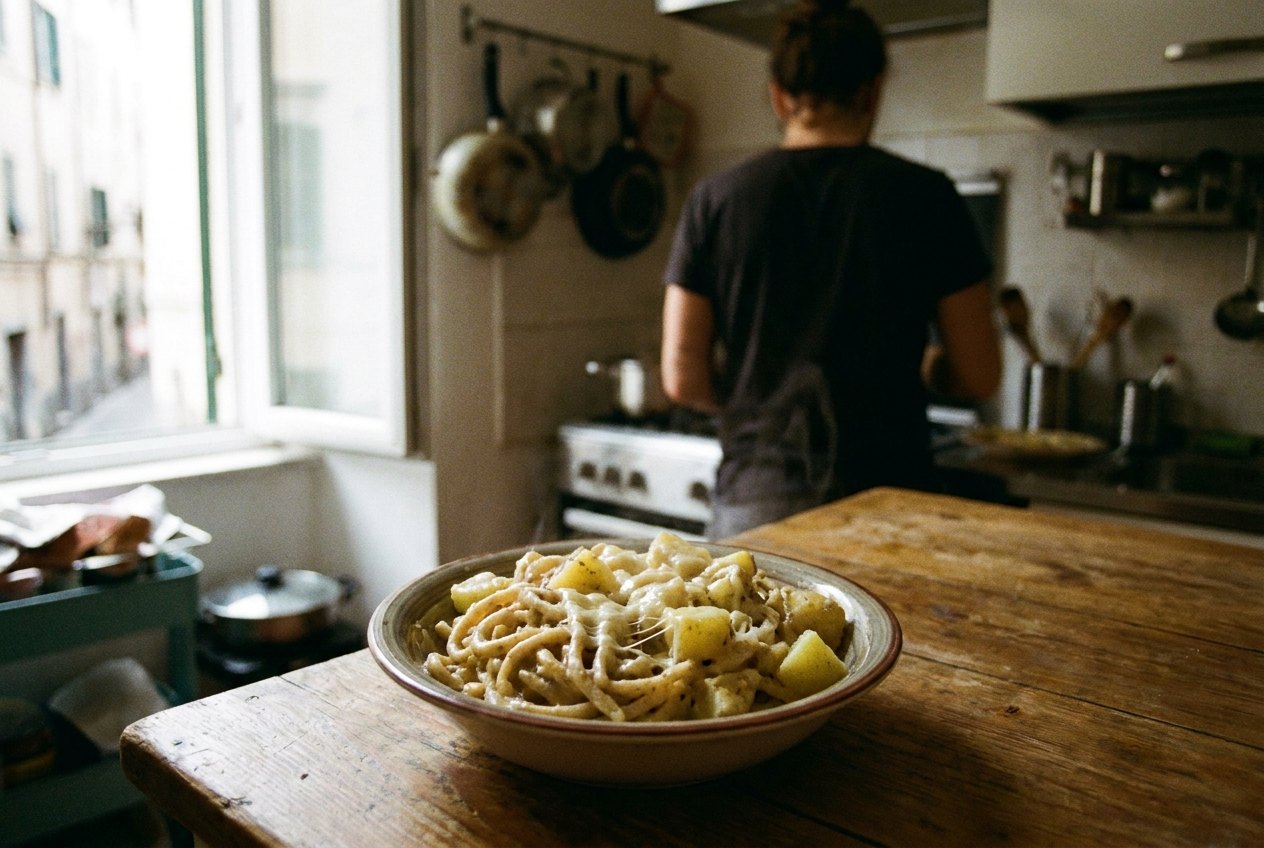
Pasta e patate is the kind of food Neapolitans grew up on: cheap, filling, made from what was in the cupboard and better than it has any right to be. Potatoes are cooked slowly with a soffritto of onion, celery and carrot until they start to fall apart, then short pasta is cooked directly in the pot, absorbing the starchy broth until the whole thing turns thick and creamy. A piece of provolone, or the hard rind of a cheese, goes in at the end and melts into strings.
It needs one deep pot and one burner, which makes it ideal for a small rented kitchen. Every family has its own version. This is a simple one, built around a morning at the market.
A morning at La Pignasecca
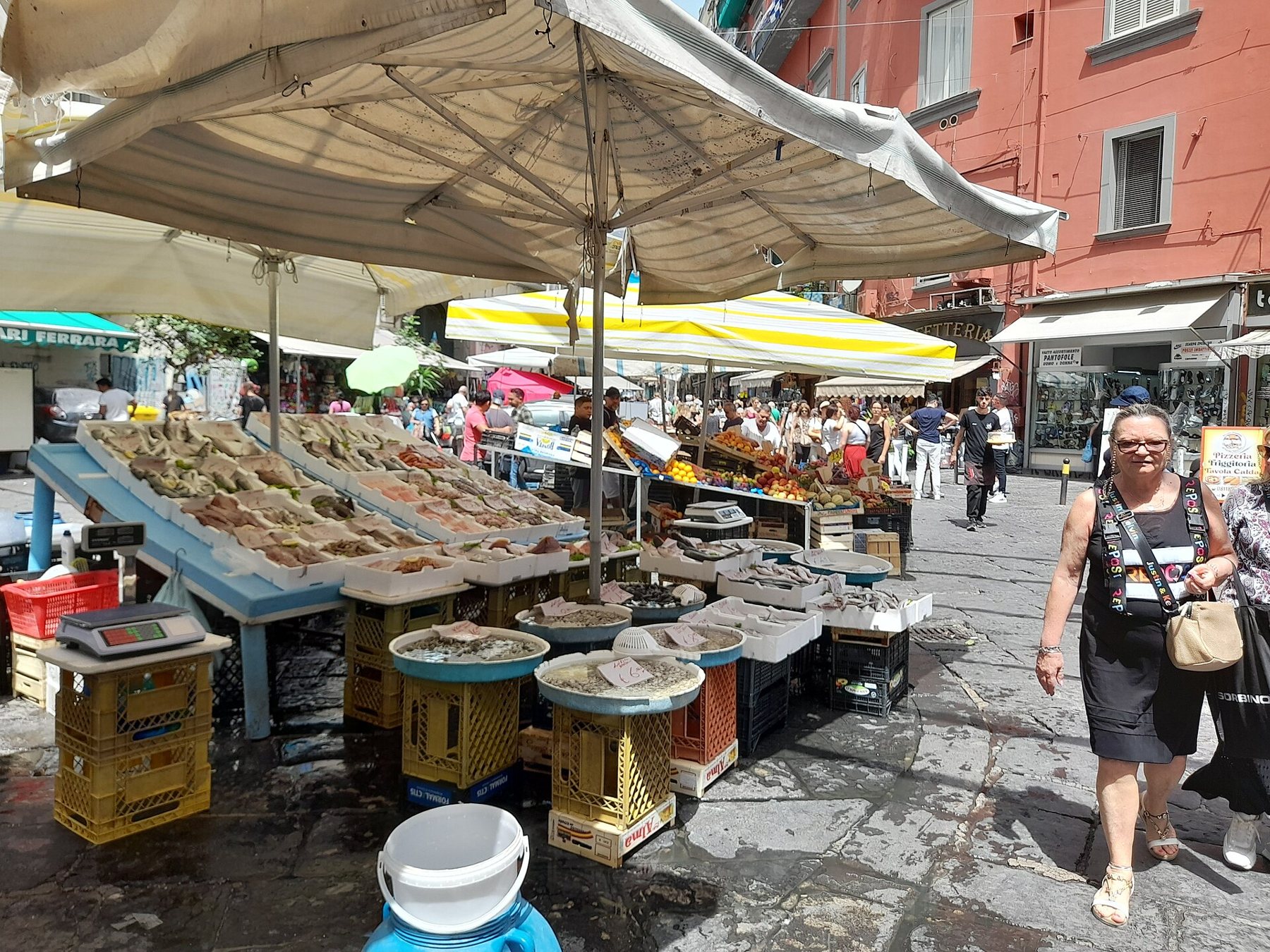
La Pignasecca is one of the oldest street markets in Naples, running along a narrow street near Montesanto station, where the funicular and the local trains arrive. It is open every morning except Sunday, and it is loud, crowded and full of character, with stalls of fish on ice, piles of vegetables, cheese, bread, cured meats and household goods, and stallholders calling out their prices.
For this dish, look for floury potatoes, the kind that break up when cooked, and a ripe tomato. At the cheese stalls, ask for a piece of provolone, or for the rinds of provolone or parmesan, which some sellers keep aside and sell cheaply. The cheese is what makes the dish.
Pasta mista, and why it matters
The traditional pasta for this dish is pasta mista, a mixture of different short shapes. It was once the broken ends and odds of different packets, swept together and sold cheaply. Today many producers sell it ready-mixed in bags labelled pasta mista. The different shapes cook at slightly different speeds, which gives the dish its texture, some pieces soft, some still firm.
If you cannot find it, use any short pasta, or mix the ends of two or three packets yourself. Avoid long pasta, which does not work here.
At the stove
Another list: LisbonPan-roasted sardines when there is no grill on the balcony- Peel the potatoes and cut them into small cubes, about 1 cm. Chop the onion, celery and carrot finely. Chop the tomato.
- In the deepest pot in the kitchen, warm a few tablespoons of olive oil over a medium heat. Add the onion, celery and carrot with a pinch of salt and cook gently for about 10 minutes until soft.
- Add the potatoes and the tomato, stir and cook for a couple of minutes. Pour in enough hot water to just cover the potatoes, season with salt and pepper, and simmer for 15 to 20 minutes, stirring now and then, until the potatoes are soft and starting to break up.
- Add the pasta and stir. Keep a kettle of hot water ready. Cook the pasta in the pot, stirring often so it does not stick, adding hot water a little at a time when it looks dry, much as you would for risotto.
- When the pasta is nearly done, add the provolone, cut into small cubes, or the cheese rinds. Stir until the cheese melts into strings and the mixture is thick and creamy.
- Take it off the heat, cover and leave to rest for two or three minutes. Serve with grated parmesan, black pepper and a thread of olive oil.
Getting the texture right
The finished dish should be thick enough to hold a spoon upright, but still loose enough to settle in the bowl. If it is too dry, add a splash of hot water; if it is too thin, cook it a little longer, stirring, and the starch from the pasta and potatoes will thicken it. Keep stirring towards the end: the bottom catches easily.
Some cooks add a few small cubes of pancetta or lard with the soffritto, or a few cherry tomatoes instead of the large one. In winter, a handful of chopped celery leaves at the end adds freshness. Basil, if you can find it, is good torn over the top in summer.
Using the rest of the shop
A morning at La Pignasecca leaves plenty for the rest of your stay. Leftover potatoes can be fried the next day, and celery and carrot can start another soffritto. The rest of the provolone is good with bread and a glass of wine. Fresh mozzarella, bought on the day and eaten within hours, is one of the pleasures of Naples, and the market's cheese stalls sell it in many sizes.
Leftover pasta e patate thickens in the fridge into a solid cake. Neapolitans fry slices of it the next day in a little oil until crisp, a dish of its own.
It needs one deep pot and one burner, which makes it ideal for a small rented kitchen.
Neapolitan kitchen manners
Naples takes its food seriously. At the market, ask before you touch fruit and vegetables; many sellers prefer to pick for you. Carry small change and a sturdy bag. Prices are usually displayed; bargaining is not common for small food purchases. For more one-pot cooking in a southern city, see Palermo, and for a Mediterranean contrast, Lisbon's sardines. Market days and hours change, so check them for Naples before you go.
Leftover provolone also goes well grated over eggs the next morning.
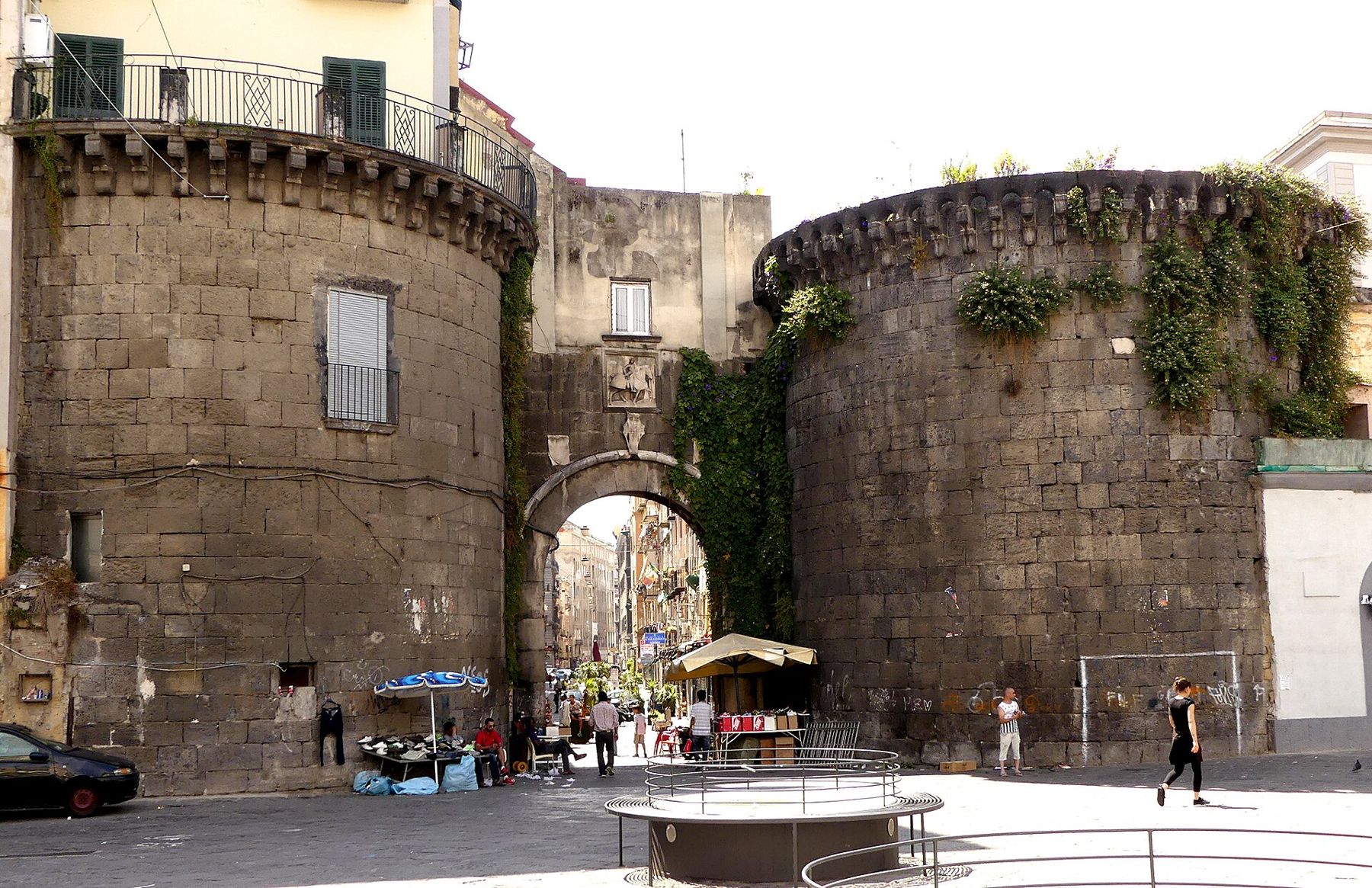
On the way home from the market, the fish market at Porta Nolana, a few minutes away by the old city gate, is worth a detour for its noise and its stalls.
The photographs on this page were shared by their photographers under open licences. Names and licences are on who took the market shots.